Advanced Testing in Charleston and Mt. Pleasant, SC
Reviewed by Ashley Harwyn, PA-C | A4M Board Certified | Updated September 4, 2026
Most pages about advanced testing are a menu. This one is about how to decide what belongs on yours, including the parts of our own menu where the evidence is thinner than the marketing usually admits.
The short version. A test earns its place by changing what happens next. Some of the tests here carry a formal recommendation grade from the US Preventive Services Task Force, like screening for prediabetes and type 2 diabetes[3]. Others, like vitamin D screening in adults without symptoms, carry a grade I, meaning the evidence is insufficient either way[1]. We will tell you which is which before you pay for it.
What makes a test worth running?
Two questions, asked before the draw rather than after it. What would a positive result change, and what would a negative one rule out? If neither answer is concrete, the test is producing information rather than answering a question, and information you cannot act on has a cost without a benefit.
The second filter is public. The US Preventive Services Task Force grades screening tests for adults without symptoms, and those grades are the closest thing this field has to a scorecard. They are worth knowing because almost nobody selling a panel volunteers them.
Which tests here carry a recommendation?
A grade I means the evidence is insufficient either way, not that the test is worthless.
Screening for prediabetes and type 2 diabetes is a grade B for adults aged 35 to 70 who have overweight or obesity, and the Task Force lowered that starting age from 40 to 35 in 2021[3]. A grade B means moderate net benefit. It is cheap, it is quick, and a positive result changes the plan immediately.
Lipids sit inside a decision rather than standing alone. The Task Force recommends a statin for primary prevention in adults aged 40 to 75 who have at least one cardiovascular risk factor and an estimated ten-year risk of 10 percent or greater, a grade B[2]. Between 7.5 and under 10 percent it recommends offering one selectively, a grade C. For adults 76 and older the evidence is insufficient to say[2]. That is why a lipid panel is read alongside your age, blood pressure and history rather than against a reference range in isolation. See advanced lipid testing.
The most common test with the least agreement
Vitamin D is the clearest example of a popular test with no formal backing for routine use. For asymptomatic, community-dwelling, nonpregnant adults, the Task Force concludes the evidence is insufficient to assess the balance of benefits and harms of screening for vitamin D deficiency, a grade I[1].
The reason it gives is more useful than the grade. Vitamin D requirements vary between individuals, no single serum level defines deficiency, and no consensus exists on the levels that represent sufficiency[1]. So two labs can flag the same number differently, and a result that looks low is not automatically a condition.
None of that makes the test worthless. It means the number needs a reason to be ordered and a clinician to interpret it, rather than a threshold on a printout deciding what you take for the next year.
Why running everything is not the safe option
It feels thorough, which is why it sells. The problem is arithmetic. Every test has a false positive rate, and the more tests you run at once, the higher the chance that at least one comes back abnormal in a completely healthy person.
An abnormal result nobody expected does not stay on the page. It generates a repeat test, sometimes imaging, sometimes a referral, always cost, and reliably some worry, for something that in many cases was never going to affect you. That is the harm side of the balance the Task Force keeps referring to, and it is real even though it never appears on a menu.
What a reference range is, and what it is not
A reference range is not a target. For most analytes it is the middle 95 percent of results from a reference population, which means one in twenty healthy people falls outside it by definition. Being slightly out of range is common, expected, and frequently meaningless.
A decision threshold is a different animal. It is a number chosen because crossing it changes what should happen, and it comes from outcome data rather than from a population spread. A total testosterone of 300 ng/dL and a ten-year cardiovascular risk of 10 percent are decision thresholds[2]. A vitamin D level is not one, because no consensus exists on what the number should be[1].
This distinction is where most of the confusion in wellness testing lives. A panel printed with red flags against every out-of-range value looks alarming and is usually describing normal biological variation. The useful question is never whether a value sits inside a band. It is whether the value crosses a threshold that changes a decision.
Testing that is worth repeating
Some measurements are far more useful as a trend than as a snapshot, and that changes how they should be ordered. A single body composition reading tells you where you are; the same measurement three months later tells you whether a plan is working, which is the part that actually informs anything. A scale cannot do that, because it cannot separate muscle from fat or from water. See body composition analysis.
The same logic applies to blood sugar, lipids and thyroid function once a treatment has started. Repeating a short, targeted panel on a schedule is usually cheaper than one broad panel and considerably more informative, because you are measuring a direction rather than a point. It also has a natural stopping rule: when the number stops moving and the symptoms have settled, the testing can stop too.
Interactive · 60 seconds
What Should Actually Be On Your Panel?
Select what you have been experiencing. This is an educational reflection tool that points toward what is worth evaluating, not a diagnosis. Nothing is stored or sent anywhere.
Tap all that apply
What this changes about the panel
Based on what you selected, these are the areas a clinician would want to look at together. This is a starting point for a conversation, not a diagnosis.
The only way to know what is driving your own symptoms is to have them evaluated by a clinician with the time to look properly.
Educational only. Not a diagnosis or a substitute for clinical evaluation.
What a grade does and does not mean
What a grade tells you
A or B means the Task Force found net benefit and recommends the screening. C means offer it selectively based on individual circumstances. I means the evidence is insufficient to weigh benefits against harms. D means recommends against. The grade describes screening people without symptoms.
What a grade does not tell you
Whether a test is right for you specifically. A grade I is not a verdict that the test does nothing, and plenty of valuable testing has never been graded at all, because the Task Force only evaluates screening. A test ordered for a symptom is judged on whether it changes what happens next.
The distinction that gets lost most often is between screening and investigating. The Task Force grades screening: testing people who have no symptoms. A test ordered because of a specific symptom, a family history or an abnormal earlier result is a different activity, and it is judged on whether it changes what happens next. Plenty of valuable testing has no grade simply because it was never a screening question.
How a panel gets chosen in Mount Pleasant and Charleston
History first, and it takes as long as it takes, because the history is what narrows the list. Then a panel built from that, which for most people is shorter than they expected and more specific. Then a conversation about the results that says what each one means, what it does not mean, and what changes because of it.
Ashley Harwyn, PA-C sees patients in Mount Pleasant on Bramson Court and in downtown Charleston at the Longevity Club on Rutledge Avenue. If you have had testing elsewhere, bring it, including the times of day the samples were drawn, because several analytes move through the day and a result read without that context can be misleading.
We will not sell a fixed panel that includes tests answering no question you have, and we will not present a grade I test as though it were settled science[1]. If a result cannot be acted on, it was not worth the draw, and saying so before the order is placed is the whole point of this page.
To book, call 843-981-0870 or request an appointment through the form on this site. Bring any labs from the last two years, the draw times if you have them, and a note of anything that has already been explained to you, so we are not paying twice for the same answer.
Founder, Solcara Health · Board Certified in Anti-Aging and Functional Medicine (A4M)
Ashley has practiced medicine for more than fifteen years. Her path into it began at home, with a family member born with a congenital heart defect and a childhood spent watching how much the quality of a clinician's attention could change the shape of a life. She has since practiced across a range of settings, including medical mission work in Uganda, before founding Solcara to build the kind of practice she kept wishing existed, one that treats women as whole people and tells them the truth about what the evidence does and does not support.
U.S. Food and Drug Administration, HHS, and The Menopause Society sources.
US Preventive Services Task Force. Vitamin D Deficiency in Adults: Screening. Recommendation Statement, April 13, 2021. Read the USPSTF recommendation
US Preventive Services Task Force. Statin Use for the Primary Prevention of Cardiovascular Disease in Adults: Preventive Medication. Recommendation Statement, August 23, 2022. Read the USPSTF recommendation
US Preventive Services Task Force. Prediabetes and Type 2 Diabetes: Screening. Recommendation Statement, August 24, 2021. Read the USPSTF recommendation
Be taken seriously, and told the truth
Book an evaluation at The Longevity Club, 163 Rutledge Avenue downtown, or our Mount Pleasant office.
Medical Disclaimer: This article is for educational and informational purposes only and does not constitute medical advice. It describes a regulatory labeling change and general treatment categories; it is not a recommendation that any individual start, stop, or change a medication. Hormone therapy of any kind, including local vaginal estrogen, requires evaluation by a qualified, licensed clinician who knows your personal and family history. Consult a qualified healthcare provider before making medical decisions. Information reflects sources available as of August 20, 2026.
Ashley Harwyn, PA-C, is Board Certified in Anti-Aging and Functional Medicine (A4M) and the founder of Solcara Health. Solcara serves South Carolina from Downtown Charleston (163 Rutledge Ave, Ste 202, The Longevity Club) and Mt. Pleasant (496 Bramson Ct, Ste 120).
Find The Right Clinician For Bioidentical Hormone Replacement Therapy
ANTI-AGING MEDICINE with ashley harwyn pA-c
Ashley started Solcara Health in 2022. She began her career in Family Medicine and then Women's Health. She is board certified in Anti-Aging and Functional Medicine (A4M). She is highly trained and experienced in the area of Anti-Aging medicine and focuses her practice on Bioidentical Replacement Hormone Therapy, Hormone pellet therapy, Peptide therapy, Nutrition, Weight loss, Cosmetic treatments, and other Integrative medicine modalities.
Find The Right Clinician For Testosterone Replacement Therapy (TRT)
ANTI-AGING MEDICINE with ashley harwyn pA-c
Ashley started Solcara Health in 2022. She began her career in Family Medicine and then Women & Men's Health. She is board certified in Anti-Aging and Functional Medicine (A4M). She is highly trained and experienced in the area of Anti-Aging medicine and focuses her practice on Testosterone Replacement Therapy (TRT), Hormone pellet therapy, Peptide therapy, Nutrition, Weight loss, Cosmetic treatments, and other Integrative medicine modalities.
why choose solcara health for the O-shot®?
Some practices see the O-Shot® as just another procedure, but Ashley Harwyn, PA-C, sees this as a perfect part of Solcara Health's overall mission to make a positive difference in our patients’ lives.
Ashley Harwyn, PA-C is a Licensed & Certified O-Shot® Provider. Only Certified O-Shot® Providers may administer the O-Shot®.
Ashley Harwyn, PA-C, has received extensive training by Dr. Charles Runels, the inventor of the O-Shot®.
Please Beware! The Orgasm Shot® (O-Shot®) procedure is a very specific method of using blood-derived growth factors to rejuvenate the vagina to help relieve women with urinary incontinence and sex problems. Anyone who uses either name (O-Shot® or Orgasm Shot®) who is not certified to do the procedure, is violating laws, & should not be trusted. Not all PRP processing methods are the same.
The PRP processing method Solcara Health utilizes helps us achieve the highest growth factor concentration for optimal results.
why choose solcara health for the P-shot?
Some practices see the P-Shot® as just another procedure, but Ashley Harwyn, PA-C, sees this as a perfect part of Solcara Health’s overall mission to make a positive difference in our patients’ lives.Prostate cancer significantly impacts men's health, highlighting the importance of early detection and effective treatments like the P-Shot.Ashley Harwyn, PA-C is a Licensed & Certified P-Shot® Provider.
Only Certified P-Shot® Providers may administer the P-Shot®.Ashley Harwyn, PA-C, has received extensive training by Dr. Charles Runels, the inventor of the P-Shot®. Please Beware! The Priapus Shot® (P-Shot®) procedure is a very specific method of using blood-derived growth factors to enhance male sexual performance.
Anyone who uses either name (P-Shot® or Priapus Shot®) who is not certified to do the procedure, is violating laws, & should not be trusted. Not all blood extraction processing methods are the same. The extraction processing method Solcara Health utilizes helps us achieve high growth factor concentrations for optimal results.
book a consultation
Start the path to lively up your health today! Fill out the form and we will be in touch with you shortly to schedule your consultation!
Visit us in Mount Pleasant
Visit us at Longevity Club
Thank you! Your submission has been received!
Oops! Something went wrong while submitting the form.



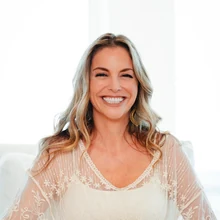 Ashley Harwyn, PA-C
A4M Board Certified · Founder, Solcara Health
Online
Ashley Harwyn, PA-C
A4M Board Certified · Founder, Solcara Health
Online