

.webp)

Are Peptides Legal in South Carolina?

Are peptides legal in South Carolina?
Some are. Some are not. The distinction is not the word "peptide," and it is not whether a clinic sounds legitimate. It is whether the specific medication is FDA approved, and whether it came from a pharmacy the state permits.
FDA approved peptide medications, including semaglutide, tirzepatide, liraglutide and tesamorelin, are ordinary prescription drugs. A licensed South Carolina clinician can evaluate you, prescribe one where it is appropriate, and have it dispensed by a licensed pharmacy. That is legal and it is unchanged.
Non-FDA approved peptides, usually sold as "research grade," are a different matter. In a notice to licensees, the South Carolina Board of Medical Examiners wrote that "under no circumstances is it permissible for a physician to compound, administer, or dispense a non-FDA approved or research grade peptide to a patient," and that "this prohibition includes advising, recommending, supplying, prescribing, or administering."[1]
Read that last clause again, because it is the part most clinics have missed. Advising is on the list. A provider does not have to hand you a vial to be over the line.
Three things in the notice that change how clinics have to operate
The notice is short, and it is worth reading in full.[1] Three passages carry most of the weight.
Research grade is not a grade. The Board describes these substances as "not approved by the FDA" and as having "not been tested, reviewed, or determined to be safe or effective for human use," and notes that neither provider nor patient "can verify the contents of any vials." That is the actual objection. Not that the molecule is exotic, but that nobody can tell you what is in the bottle.
Delegating does not help. The notice states that a physician "may not circumvent his or her duty of care to patients by permitting or delegating the purchase, administration, or dispensing of these drugs" to nurse practitioners or physician assistants. A supervising signature does not convert a prohibited product into a permitted one.
A waiver does not work. This is the passage that should end a common practice. The Board writes that consent forms "purporting to identify a product as 'research-grade' are ineffective and do not mitigate or eliminate the health care provider's professional or legal liability." If a clinic has asked you to sign something acknowledging that a product is research grade, that form was protecting nobody.
There is one narrow carve out, and it is worth being precise about it. Where a patient "independently acquires and self-administers such substances, the associated risk rests solely with the patient." But the Board immediately adds that "any involvement by a medical professional in recommending, supplying, prescribing, or administering these substances constitutes the practice of medicine and is prohibited."
Semaglutide was not banned. Its cheapest source was.
A lot of coverage read the notice as an attack on GLP-1 medications. It is not. Semaglutide appears in the very first line, but look at what the Board objects to.
In its footnote on semaglutide, the Board writes that "many facilities are selling semaglutide salt forms and research grade powder," that these "are not approved by the FDA nor are they evaluated for safety," and that "the only powder that should be used in compounding is the prescription quality powder."[1]
That is a sourcing rule, not a ban on the molecule. And it lines up exactly with what the FDA has said independently. The FDA states that salt forms "including semaglutide sodium and semaglutide acetate, are different active ingredients" than the base form used in the approved drugs, and that it "is not aware of any basis for compounding using the salt forms."[2]
The FDA has also warned companies "that have illegally sold unapproved drugs containing semaglutide, tirzepatide or retatrutide that are falsely labeled 'for research purposes' or 'not for human consumption.'"[2] If you have seen that phrasing on a website, it is not a technicality or a legal formality. It is the label that makes the sale possible.
Separately, in April 2026 the FDA proposed to exclude semaglutide, tirzepatide and liraglutide from the 503B bulks list, "finding no clinical need for outsourcing facilities to compound these drugs from bulk substances."[3] The direction of travel is consistent: when an approved version of a drug exists and is available, the approved version is what patients are meant to receive.
The part of the rule a patient can verify without asking anyone's permission
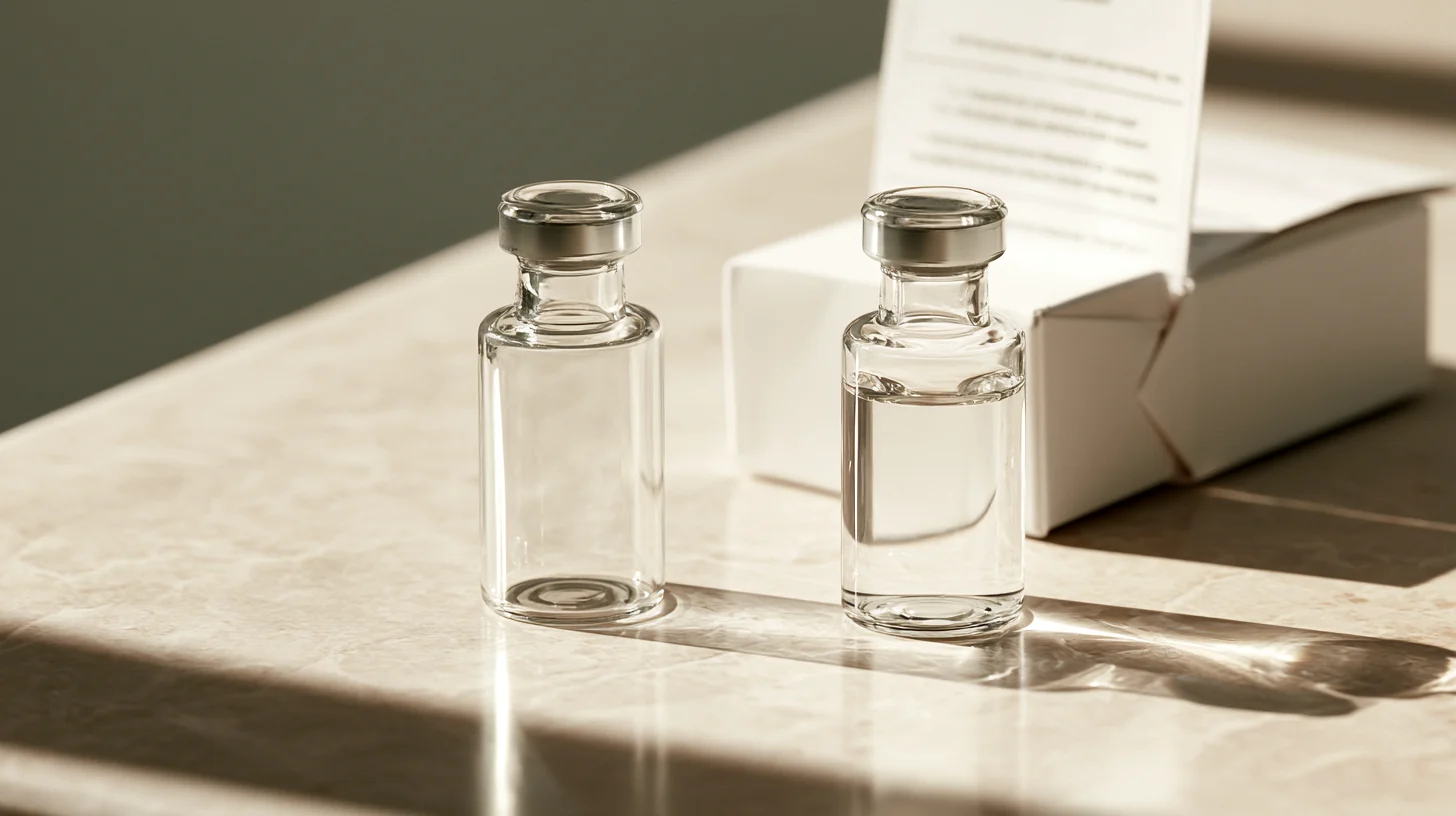
The notice closes on sourcing, and this is the most practical section for patients. Under South Carolina law, the Board writes, it is "unlawful for any facilities located within or outside of South Carolina to manufacture, produce, sell, distribute or dispense drugs without being permitted by the South Carolina Board of Pharmacy," and practitioners "must purchase all prescription products, drugs, and prescription ingredients" from a permitted entity, including "any component of a compounded drug."[1]
The Board then points to the mechanism: a practitioner compounding medications "must verify that the drugs or their components are being bought from a permitted facility," confirmed "through either the licensee lookup function or by contacting the Board of Pharmacy directly."[1]
That lookup is public. If you are currently receiving a compounded medication in South Carolina and you know which pharmacy filled it, you can check whether that pharmacy is permitted here, in about a minute: South Carolina Board of Pharmacy licensee lookup.
If your clinic cannot tell you which pharmacy dispensed your medication, that is your answer. A prescription that came from a licensed pharmacy always has a pharmacy attached to it.
The price gap is not a discount. It is the testing you did not get.
Patients ask this constantly, and it deserves a direct answer. A research grade vial ordered online is dramatically cheaper than a prescription filled at a licensed pharmacy. That gap is real, and it is not a markup.
What you pay for in the legitimate path is a list of things that each cost money: an evaluation by a licensed clinician, laboratory work where it is indicated, a medication manufactured to prescription quality and released by a permitted pharmacy, written dosing instructions, and scheduled follow up. What you save by skipping it is precisely those things. The Board's own language is that with research grade product, neither you nor your provider "can verify the contents of any vials."[1]
The consequences are documented rather than theoretical. The FDA has received reports of adverse events "some requiring hospitalization" tied to dosing errors with compounded injectable semaglutide, arising when patients measured and self administered incorrect doses and when health care providers miscalculated them.[4] Concentration depends on how much drug is in the vial and how much liquid was added, and an arithmetic slip there does not produce a slightly wrong dose. It produces one that is wrong by a factor of ten.
This is also why we do not hand patients a vial and a calculator. Here is how we handle a peptide question at Solcara. If you want the longer version of how sourcing actually works, we wrote about it in where your peptides actually come from.
Which Category Is What You Are Taking?
Select what applies to the medication you have. This is an educational tool that points toward what is worth checking, not legal or medical advice. Nothing is stored or sent anywhere.
Tap all that apply
Educational only. Not a diagnosis or a substitute for clinical evaluation.
What to do next, in Charleston or Mount Pleasant
If you are already taking something and you are not sure which category it falls into, that is a normal reason to book an appointment, not an awkward one. Bring what you have. Bring the packaging if there is any. The purpose of the visit is to work out what is appropriate to continue under a proper prescription and what is not, and to make sure nothing is stopped abruptly that should not be.
Before that, there are four questions worth asking any clinic. These are reasonable questions and a compliant practice will answer all four without hesitation:
Not the category. The product in the vial. "Peptide" is not an answer to this question, and neither is the name of the clinic.
You can verify the answer yourself with the Board of Pharmacy licensee lookup. If no pharmacy can be named, there is no prescription behind it.
A prescription follows an evaluation. It does not replace one. This is the same standard you would expect for any other medication.
Per the Board, such a form does not transfer liability, which raises the question of why it exists at all.
Solcara Health sees patients in Mount Pleasant and at The Longevity Club in downtown Charleston. If you would like a straight read on what you are currently taking, call 843-981-0870 or book an appointment.
Questions patients are asking
 Ashley Harwyn, PA-C
PA-C, ABAAHP · Founder, Solcara Health
Online
Ashley Harwyn, PA-C
PA-C, ABAAHP · Founder, Solcara Health
Online
Tap a question to ask
Which one, and from where.
The word "peptide" does not tell you whether something is legal, safe, or appropriate for you. Two questions do: is this specific medication FDA approved, and did it come from a pharmacy South Carolina permits. Both have verifiable answers, and one of them you can check yourself in about a minute.
If a clinic cannot answer either question plainly, that is information. You are entitled to a straight answer about what is in the vial and who dispensed it.
Medical Disclaimer: This article is for educational and informational purposes only and does not constitute medical advice. It describes a regulatory labeling change and general treatment categories; it is not a recommendation that any individual start, stop, or change a medication. Hormone therapy of any kind, including local vaginal estrogen, requires evaluation by a qualified, licensed clinician who knows your personal and family history. Consult a qualified healthcare provider before making medical decisions. Information reflects sources available as of August 20, 2026.
Ashley Harwyn, PA-C, is Board Certified in Anti-Aging and Functional Medicine (A4M) and the founder of Solcara Health. Solcara serves South Carolina from Downtown Charleston (163 Rutledge Ave, Ste 202, The Longevity Club) and Mt. Pleasant (496 Bramson Ct, Ste 120).

Quick Links