

Reviewed by Ashley Harwyn, PA-C, ABAAHP | A4M Board Certified | Updated October 4, 2026
A good facial leaves skin clean, clear, and hydrated for a while. Here is how to pick one of our four ZO facials, and what to check before adding a wax or a tint.
That is not a knock on facials. It is the reason to choose one for the right job. Under federal law, a cosmetic is meant for cleansing or improving appearance, while a product meant to treat a disease or change how the skin works is a drug.[1] Facials sit on the cosmetic side. They pair well with medical acne care and daily sunscreen, and they work best when the add-ons fit your skin and your medicines.
- A facial is a cosmetic service. It cleans, exfoliates, and hydrates, and the effect is temporary, so regular visits and home care matter more than any single session.[1][2]
- Our ZO menu has four facials: Ultra Hydration, Acne Treatment, Skin Bright (“Red Carpet”), and Invisipeel Resurfacing.
- Extractions with sterile tools are safer than squeezing at home, which can push debris deeper and lead to scars or infection. Blackheads can come back.[3]
- If you have taken isotretinoin in the last six months, facial waxing is off the table, and retinoids should be paused 2 to 5 days before a face wax.[5]
- Lash and brow tinting carries a real eye risk. The FDA warns that permanent tints and dyes have caused serious eye injuries, including blindness.[6]
- Daily broad-spectrum SPF 30 or higher, gentle cleansing, and moisturizer do more for your skin over time than any one facial.[2]
What a facial can do for your skin, and for how long
Think of a facial as a deep clean and a reset. A typical visit removes surface oil, makeup, and dead skin, softens the skin with exfoliation, and ends with a mask and moisturizer. Moisturizer traps water in the skin, which can give it a fresher look.[2] That glow is real, but it is short-lived, because skin keeps renewing itself and returns to its usual state.
Where a facial earns its place is in the small, practical things. Clogged pores can be cleared. Dry, tight skin gets a dose of hydration. Rough patches feel smoother. For many people, a regular visit also keeps them consistent with home care, which is where most of the long-term change happens.
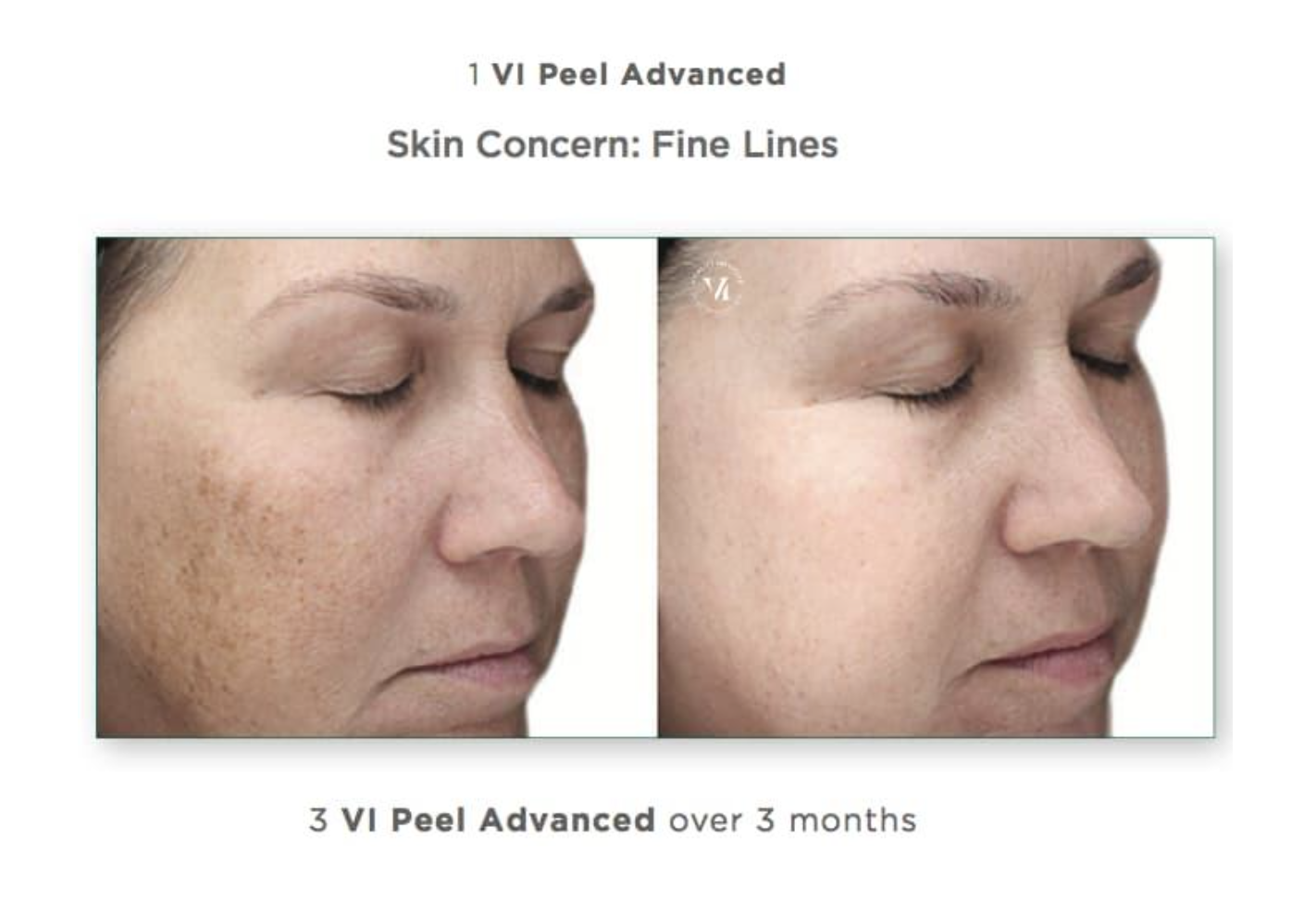
What a facial cannot do is rebuild collagen in a way that fills deep lines, lift loose skin, or flatten scars. Some menus promise those outcomes from a facial alone. We do not. If wrinkles, scars, or sagging are your main concern, a facial can be a gentle starting point, but the tools that reach those problems are procedures such as peels, microneedling, laser, or injectables, and each has its own risks and recovery.
It also helps to know how the FDA sorts skin products. Cosmetics are for cleansing, beautifying, or changing appearance. A product claiming to treat disease, or to affect the structure or function of the body, is regulated as a drug.[1] That line explains why a facial serum can make skin look better today, while lasting change in acne or sun damage usually needs a medical plan.
Cleans away oil and dead skin, clears clogged pores with sterile tools, and adds hydration, so skin looks fresher and feels smoother for a while. It also pairs well with medical acne care and daily sunscreen.
A way to erase wrinkles, acne scars, or stretch marks, a replacement for acne treatment, or a lasting anti-aging fix. Those goals need different procedures, and daily habits do more over time than any single facial.
Matching the four ZO facials to your skin
We build each facial from the ZO Skin Health line, and the right one depends on what your skin is doing now, not on a fixed package. Here is how the four options on our menu differ, in plain terms.
| Facial | What happens | Often chosen for | Worth knowing |
|---|---|---|---|
| Ultra Hydration | Cleansing, then a hydrating treatment with aloe and hyaluronic acid | Dry, tight skin, or skin calming down after a stronger procedure | Moisturizer helps skin hold water, so the effect is comfort and plumpness, not repair[2] |
| Acne Treatment | Extractions with sterile tools, then a sulfur mask | Blackheads, whiteheads, and clogged pores | Extraction clears what is there now, and blackheads can return[3] |
| Skin Bright (“Red Carpet”) | A mild peel for a brighter, more even look | Dull skin before a wedding, photo day, or trip | Book it with your event date in mind, and tell us about past reactions |
| Invisipeel Resurfacing | A mild resurfacing treatment designed to avoid visible peeling | Uneven texture when you have no time for downtime | Still mention retinoids, recent sun, and sensitive skin |
What to tell us at check-in
Tap any line that is true for you. None of these rule a facial out. They help us pick the right facial and skip any add-on that does not suit you today.
Use the table as a starting point, not a rule. Skin that is red or flaky after a stronger treatment usually needs hydration before anything that exfoliates, and we would rather adjust the plan at the visit than book you into something your skin is not ready for that day.
Breakouts and extractions: what a facial adds to acne care
Squeezing pimples at home is the habit dermatologists most want people to drop. Pushing on a blemish often drives its contents deeper into the skin, which increases inflammation, and hands carry bacteria that can cause an infection.[3] The AAD lists permanent acne scars, more noticeable acne, and more painful acne among the results.[3]
Extraction is the careful version. It uses sterile instruments to remove blackheads and whiteheads, sometimes after the skin has been exfoliated.[3] The AAD describes it as rarely a first choice, usually offered when other acne treatment has not cleared the skin, and it notes that blackheads and whiteheads can come back without a skin-care plan.[3] That is the right way to think about the acne facial: a cleanup that supports treatment, not a substitute for it.
The sulfur mask in our acne facial has a long track record. Sulfur has antibacterial and keratolytic activity, meaning it helps loosen and shed dead skin, and it has been used for acne for many years, alone or with ingredients such as salicylic acid.[4] Side effects from sulfur on the skin are rare and are mostly mild irritation where it was applied.[4] Much of the research on sulfur is decades old, so we treat it as a helpful extra rather than the core of acne care.
If breakouts are frequent, painful, or leave marks, a facial alone will not keep up. That pattern calls for a medical acne plan, which may include prescription treatment and is covered on our acne treatment page. The facial then becomes the maintenance step that keeps pores clear between visits.
Add-ons, and the safety question behind each one
Most add-ons can be booked with any facial, and each carries an additional cost. They are worth choosing on purpose, because several of them interact with the medicines and products you already use.
Peel boosters and laser. An Invisipeel or Stimulator peel can be layered onto a facial for more exfoliation, and a laser micro-peel goes further still. Stronger exfoliation means more chance of redness and irritation, so we ask about retinoids, recent sun, and any history of dark marks first. Our chemical peels page covers peel depth and recovery in detail.
Dermaplaning. A sterile blade gently removes dead skin and fine facial hair so the skin feels smoother. It is covered on our dermaplaning page.
Microneedling with PRP. SkinPen microneedling, alone or with platelet-rich plasma, is a procedure rather than a facial step, with its own preparation and recovery. See our microneedling page before adding it.
Facial and brow waxing. Waxing pulls on the skin, and some medicines thin it enough to tear. The AAD says not to wax if you have taken isotretinoin in the last six months, and to stop retinol and prescription retinoids 2 to 5 days before waxing your face.[5] It also advises against waxing sunburned or very sensitive skin.[5]
Lash and brow tinting. This is the add-on with the most serious risk, and the FDA's guidance deserves a careful read. The FDA warns that permanent eyelash and eyebrow tints and dyes have been known to cause serious eye injuries, including blindness.[6]
The FDA's own pages are not perfectly consistent on approval. Its hair dye page states that color additives used to dye brows or lashes need FDA approval for that use, and that none are approved.[7] Its eye cosmetic page describes one narrow exception: silver nitrate, in professional-use-only products, at no more than 4 percent, not intended for anyone under 16, and applied for no longer than 1 minute.[6] Coal-tar hair dye is never permitted on brows or lashes, and the FDA has an import alert on lash and brow dyes made with coal tar colors.[6][7]
If you want a tint, ask which product will be used and whether it is made for lashes and brows. Never use box hair dye near your eyes at home. With sensitive eyes, an eye condition, or a past reaction, skip it or talk with us first.
Not sure which add-ons are safe with your medicines? Call 843-981-0870 before your visit. Tell us what you use on your skin and anything you take by mouth, and we will help you plan a facial that fits.
Keeping the results between visits
The hour on the treatment table is the smaller part of good skin. The AAD's advice for slowing visible skin aging is mostly daily habits: broad-spectrum, water-resistant sunscreen with SPF 30 or higher on all uncovered skin every day, a gentle wash twice a day and after heavy sweating, and a facial moisturizer every day.[2] Scrubbing hard irritates skin, and irritation speeds up skin aging, so gentle is better than vigorous.[2] If a product stings or burns, the AAD says to stop using it, because that is a sign of irritation.[2]
After a facial, keep the next day or two simple. Skip harsh scrubs and new active products, use a plain moisturizer, and be strict about sunscreen, especially after a peel booster or dermaplaning. If redness or swelling after waxing lasts more than two days, the AAD advises seeing a dermatologist.[5] Call us sooner if anything blisters, oozes, or affects your eyes.
When you come in, Ashley Harwyn, PA-C, will look at your skin, ask about your medicines and past reactions, and help you choose a facial and any add-ons that suit you. She is board certified in anti-aging and functional medicine through A4M. Facials are offered in our Mount Pleasant office on Bramson Court and at The Longevity Club on Rutledge Avenue, close to the downtown Charleston hospitals.
Acne Treatment
For breakouts that need more than a facial can give. Read Acne Treatment.
Chemical Peels
When you want stronger exfoliation for tone and texture. Read Chemical Peels.
Skin Care
Building the daily routine that keeps a facial's results. Read Skin Care.
Brows and Lashes
Our other brow and lash services. Read Brows and Lashes.
 Ashley Harwyn, PA-C
PA-C, ABAAHP · Founder, Solcara Health
Online
Tap a question to ask
Pick the facial your skin needs today
Book a facial and bring a list of your skin care products and medicines, so we can choose the facial and add-ons that suit you.
BOOK A CONSULTATION →Or call 843-981-0870
Ashley Harwyn, PA-C, ABAAHP
Founder, Solcara Health · Diplomate, American Board of Anti-Aging Health Practitioners (ABAAHP)
Ashley has practiced medicine for more than fifteen years. Her path into it began at home, with a family member born with a congenital heart defect and a childhood spent watching how much the quality of a clinician's attention could change the shape of a life. She has since practiced across a range of settings, including medical mission work in Uganda, before founding Solcara to build the kind of practice she kept wishing existed, one that treats patients as whole people and tells them the truth about what the evidence does and does not support.
Full bio →References
FDA guidance on cosmetics versus drugs, eye cosmetic safety, and hair dyes; American Academy of Dermatology pages on skin aging, pimple popping and extraction, and waxing; and a peer-reviewed review of sulfur in dermatology, each accessed October 4, 2026.
- U.S. Food and Drug Administration. Is It a Cosmetic, a Drug, or Both? (Or Is It Soap?). FDA. 2024. fda.gov
- American Academy of Dermatology. 11 ways to reduce premature skin aging. AAD. aad.org
- American Academy of Dermatology. Pimple popping: Why only a dermatologist should do it. AAD. aad.org
- Gupta AK, Nicol K. The use of sulfur in dermatology. Journal of Drugs in Dermatology. 2004. pubmed.ncbi.nlm.nih.gov
- American Academy of Dermatology. Hair removal: How to wax. AAD. aad.org
- U.S. Food and Drug Administration. Eye Cosmetic Safety. FDA. 2022. fda.gov
- U.S. Food and Drug Administration. Hair Dyes. FDA. 2025. fda.gov
Medical Disclaimer: This page is for educational and informational purposes only and does not constitute medical advice, and reading it does not create a patient-provider relationship. It describes general medical information and categories of care, not a recommendation that any individual start, stop, or change any test, treatment, or medication. Any diagnosis or treatment decision requires evaluation by a qualified, licensed clinician who knows your personal and family history. Consult a qualified healthcare provider before making medical decisions. Information reflects sources available as of October 4, 2026.
Ashley Harwyn, PA-C, ABAAHP, is a Diplomate of the American Board of Anti-Aging Health Practitioners (ABAAHP) through A4M and the founder of Solcara Health. Solcara serves South Carolina from Downtown Charleston (163 Rutledge Ave, Ste 202, The Longevity Club) and Mt. Pleasant (496 Bramson Ct, Ste 120).
Facials FAQ's

Quick Links
