

Reviewed by Ashley Harwyn, PA-C, ABAAHP | A4M Board Certified | Updated October 4, 2026
A light erbium laser peel can even out sun-worn tone and smooth texture with a short recovery. Here is what the research shows it changes, and what it will not do.
So this is a useful, modest treatment with a short recovery, not a facelift and not a way to erase years. It suits people who want brighter, more even skin and smoother texture without a week at home. It is a poor fit for loose skin, deep folds, or anyone hoping one visit will change their face.
- The treatment uses an erbium (Er:YAG) laser, which is strongly absorbed by water in the skin and removes a much finer layer than a CO2 laser, so recovery is shorter but the effect is milder.[2]
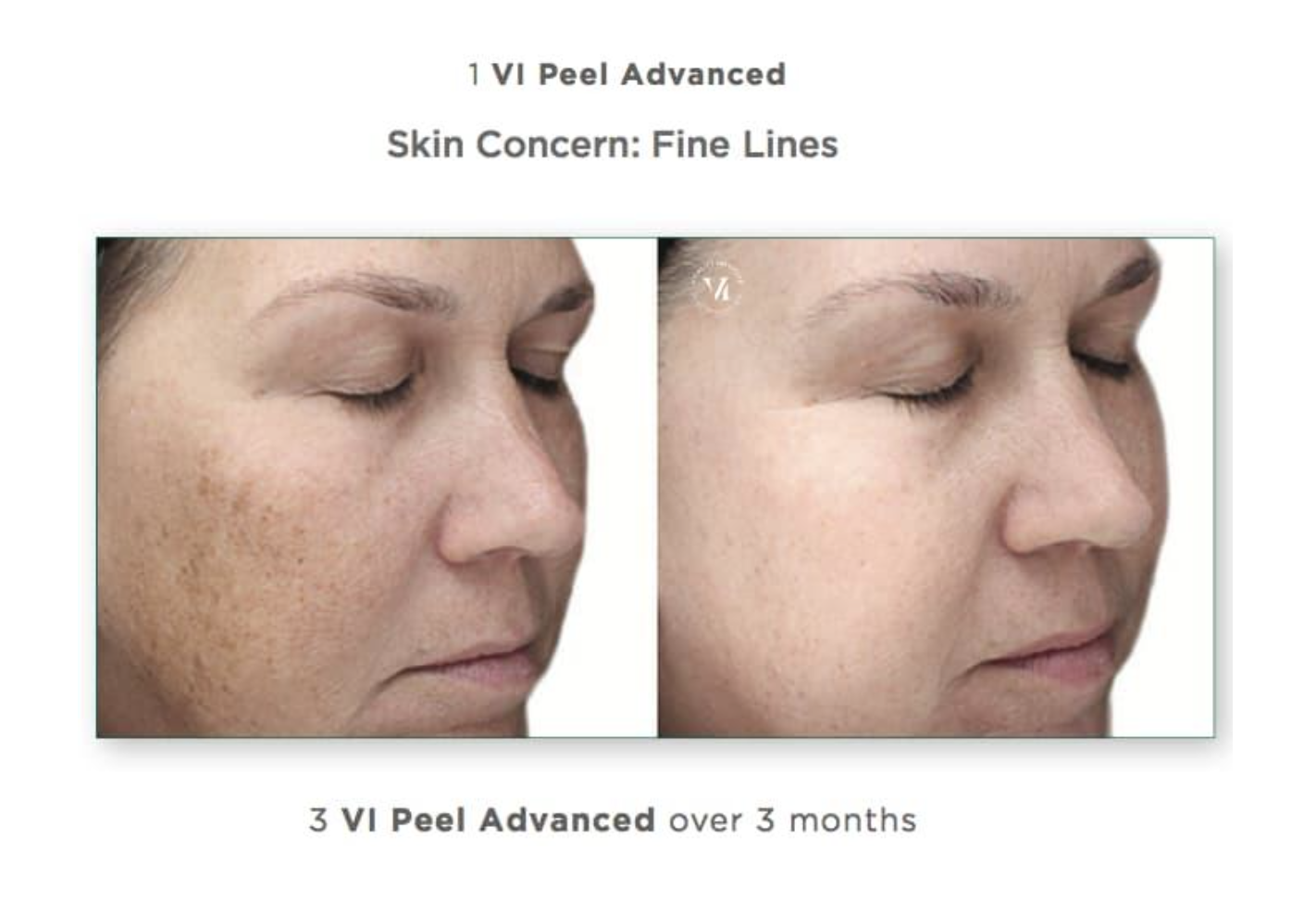
- In a randomized trial, after three light erbium peels a month apart, doctors rated uneven pigment 24 to 36 percent better, depending on the setting.[1]
- Only the stronger setting improved wrinkles, and it tended to bring more redness that took longer to clear.[1]
- A light peel is not a tightening treatment. The laser resurfacing that firms loose skin is the deeper kind, and it usually means 5 to 7 days at home.[3]
- Darker skin can be treated, but it is more prone to burns and dark marks, so settings and timing need extra care.[5][6]
- Adding platelet-rich plasma (PRP) is optional. The research on PRP for facial aging is too weak for firm conclusions, so we present it as an add-on with unproven benefit, not a promise.[7]
How an erbium laser peel works on your skin
Every laser is tuned to a target. Erbium laser light is strongly absorbed by water, and skin tissue holds a lot of water. When the beam hits, it removes a very fine slice of the surface.[2] That finer action is why recovery after erbium is shorter than after the older CO2 laser. It is also why erbium cannot match CO2 for deep wrinkles or heavy sun damage.[2]
We use a Fotona laser platform in its erbium mode for this treatment. A micro-peel keeps the depth shallow and usually makes a single pass across the face. Think of it as taking off the dull, rough top layer that sun and time leave behind, not reshaping anything underneath. As the skin rebuilds that layer, tone tends to look more even and the surface feels smoother.
That shallow depth is a choice, and it has a cost. Deeper erbium resurfacing reaches more lines and scarring, but healing then takes anywhere from 3 to 10 days, depending on how deep the laser goes.[6] The micro-peel trades some of that power for a recovery most people can fit into a normal week. Which end of that range makes sense for you is the main decision we make together at your consult.
Even out blotchy, sun-worn tone, smooth rough texture, and freshen overall appearance in mild to moderate sun damage, over a series of sessions, with a recovery most people can fit into a normal week.
Tightening loose or sagging skin, erasing deep wrinkles, instant or permanent results, or making you look years younger after one visit. Those goals need deeper treatments or a different approach.
What the research shows a light laser peel can change
The clearest evidence for this exact style of treatment comes from a randomized trial at Stanford. Forty-six adults with mild to moderate sun spots and fine lines were split into two groups. Each group had three one-pass, full-face erbium peels, one month apart. One group got a gentler energy setting and the other a stronger one, and results were tracked for 20 weeks.[1]
| What was measured | Gentler setting | Stronger setting |
|---|---|---|
| Uneven pigment (doctor's rating at 3 months) | 24 percent better[1] | 36 percent better[1] |
| Overall appearance (doctor's rating) | 25 percent better[1] | 32 percent better[1] |
| Fine wrinkles (patients' own rating) | No improvement[1] | Improved[1] |
| Redness afterward | Somewhat less[1] | A trend toward more, lasting longer[1] |
Notes worth bringing to your skin visit
Tap any line that fits you. Each one changes the setting, timing, or prep we would suggest, so it helps to raise it at the start.
Read the numbers for what they are. These are moderate gains in color and overall look, after three sessions, in people whose sun damage was mild to moderate. Wrinkles only moved at the stronger setting, and that setting tended to bring more redness. Mild peeling was the most common side effect in both groups. Interestingly, the people on the gentler setting were more likely to want more treatments, because the downtime was easier to live with.[1]
What the trial does not show matters just as much. It did not test loose or sagging skin, deep lines, or results years later. Older reviews of erbium resurfacing reach a similar conclusion: the laser works best when the damage is mild, and deeper problems need deeper treatment.[2] If your main concern is laxity, the American Academy of Dermatology describes ablative resurfacing as the laser option that firms skin, with about 5 to 7 days at home afterward.[3] A light peel is built to avoid that downtime, so it should never be sold to you as a tightening treatment. Our skin tightening and skin resurfacing pages cover those goals.
Your treatment day and the week after
Preparation starts a couple of weeks ahead. In its guidance for people having laser treatment, the AAD advises stopping retinoid or glycolic acid skin products for 2 to 4 weeks, quitting smoking for at least 2 weeks, and asking about vitamin E, aspirin, and other medicines or supplements that can slow healing.[4] If you are prone to cold sores, the AAD advises medicine to prevent them. And you cannot be treated over a tan or sunburn, so the weeks before matter.[4]
On the day, we clean your skin, cover your eyes, and apply numbing cream if you want it. Expect warmth and a prickly feeling rather than sharp pain. The pass itself is quick. Right after, your face will look pink and feel like mild windburn. At the lightest settings that pinkness is usually short-lived. Stronger passes tend to bring more redness that lingers longer, and mild peeling is the most common side effect.[1]
Aftercare is simple but not optional. Keep the skin clean and moisturized, skip exfoliants and active products until we clear you to restart them, and stay out of direct sun. The AAD's advice is to protect treated skin from the sun until it heals, then keep up daily sunscreen so the sun does not undo your result.[4] We send you home with a gentle recovery routine. In our practice that usually includes ALASTIN Soothe + Protect Recovery Balm and Regenerating Skin Nectar, used as a soothing, simple barrier while the surface renews.
Plan on a series rather than a single visit, which matches both the trial design and the AAD's note that a series of laser sessions often gives the most improvement.[1][4] We book treatments at our Mount Pleasant office on Bramson Court or at The Longevity Club on Rutledge Avenue downtown, whichever is easier for you.
Darker skin, active breakouts, and other reasons to pause
Lasers can be used on all skin colors, but darker skin is more likely to burn or develop dark marks after treatment.[5] That does not rule you out. It means the settings, the spacing between sessions, and your pre-treatment skin care all need to be planned with that risk in mind, and a test area may be worth doing first. The American Society for Dermatologic Surgery also notes that people with very dark skin are usually not good candidates for laser resurfacing, so for some skin types a different treatment is the safer choice.[6] We will say so plainly if that is you.
A few other situations call for a pause. Active acne is one: the ASDS lists it as a reason to hold off on resurfacing.[6] A fresh tan or sunburn is another.[4] So is a history of poor healing or scarring, since the listed risks of resurfacing include pigment changes, infection, and scarring.[6] Pregnancy, recent use of certain acne medicines, and any open sores on the face are also worth raising at your consult so we can decide whether to wait.
If any of these apply, it is not a dead end. Often the right move is to treat the breakouts first through acne treatment, or to start with a gentler option such as a chemical peel, and come back to the laser once the skin is ready.
Not sure a laser peel suits your skin? Call 843-981-0870 to book a consult. Ashley will look at your skin type, your goals, and your calendar, then tell you which setting makes sense, or whether a different treatment would serve you better.
Adding PRP: what we can and cannot promise
Some patients ask to pair their laser peel with platelet-rich plasma (PRP). PRP is made from a small sample of your own blood, spun down to concentrate the platelets, then applied to or injected into the freshly treated skin. The idea is that growth factors from the platelets support healing and collagen. That is a reasonable idea. Whether it delivers visible results for facial aging is a separate question, and the answer so far is that nobody can say with confidence.
The most thorough look at this question is a 2024 overview of 13 systematic reviews, which together drew on 28 original studies. Most of those studies had no control group. The authors concluded that the evidence is not strong enough for firm conclusions about PRP for facial rejuvenation, whether it is used alone or combined with other treatments such as lasers.[7] Some reviews described more patient satisfaction and better skin elasticity when PRP was added to laser, but the certainty of that finding was rated very low.[7] Reported side effects were mild and short-lived, such as soreness, redness, and swelling.[7]
So here is how we handle it. If you are curious about PRP, we will explain what it involves and what it costs, and we will be clear that you are paying for a possible extra benefit that the research has not yet confirmed. If you would rather spend that money on more laser sessions or daily sun protection, that is a sensible choice too. Our PRP page covers how it is prepared and the other ways we use it.
Laser Services
An overview of every laser treatment we offer and how they differ. Read Laser Services.
Skin Resurfacing
Deeper erbium work for lines and scarring, with more downtime. Read Skin Resurfacing.
Chemical Peels
A non-laser way to brighten tone, often a good first step. Read Chemical Peels.
Platelet-Rich Plasma (PRP)
What PRP is and what the research supports. Read Platelet-Rich Plasma (PRP).
 Ashley Harwyn, PA-C
PA-C, ABAAHP · Founder, Solcara Health
Online
Tap a question to ask
Brighter skin, planned around your real week
Book a laser consult with Ashley. Bring a list of your current skin products and any dates you need to look rested.
BOOK A CONSULTATION →Or call 843-981-0870
Ashley Harwyn, PA-C, ABAAHP
Founder, Solcara Health · Diplomate, American Board of Anti-Aging Health Practitioners (ABAAHP)
Ashley has practiced medicine for more than fifteen years. Her path into it began at home, with a family member born with a congenital heart defect and a childhood spent watching how much the quality of a clinician's attention could change the shape of a life. She has since practiced across a range of settings, including medical mission work in Uganda, before founding Solcara to build the kind of practice she kept wishing existed, one that treats patients as whole people and tells them the truth about what the evidence does and does not support.
Full bio →References
A randomized trial of erbium laser micro-peels, peer-reviewed reviews of erbium resurfacing and of PRP for facial rejuvenation, and patient guidance from the American Academy of Dermatology and the American Society for Dermatologic Surgery, each accessed October 4, 2026.
- Somoano B, Hantash BM, Fincher EF, Wu P, Gladstone HB. The erbium micropeel: a prospective, randomized trial of the effects of two fluence settings on facial photoaging. Journal of Drugs in Dermatology. 2011. pubmed.ncbi.nlm.nih.gov
- Alster TS, Lupton JR. Erbium:YAG cutaneous laser resurfacing. Dermatologic Clinics. 2001. pubmed.ncbi.nlm.nih.gov
- American Academy of Dermatology. Many ways to firm sagging skin. AAD. aad.org
- American Academy of Dermatology. 10 things to know before having laser treatment for your scar. AAD. aad.org
- American Academy of Dermatology. Skin conditions that lasers can treat. AAD. 2021. aad.org
- American Society for Dermatologic Surgery. Laser resurfacing. ASDS. asds.net
- Cruciani M, Masiello F, Pati I, Pupella S, De Angelis V. Platelet rich plasma for facial rejuvenation: an overview of systematic reviews. Blood Transfusion. 2024. pmc.ncbi.nlm.nih.gov
Medical Disclaimer: This page is for educational and informational purposes only and does not constitute medical advice, and reading it does not create a patient-provider relationship. It describes general medical information and categories of care, not a recommendation that any individual start, stop, or change any test, treatment, or medication. Any diagnosis or treatment decision requires evaluation by a qualified, licensed clinician who knows your personal and family history. Consult a qualified healthcare provider before making medical decisions. Information reflects sources available as of October 4, 2026.
Ashley Harwyn, PA-C, ABAAHP, is a Diplomate of the American Board of Anti-Aging Health Practitioners (ABAAHP) through A4M and the founder of Solcara Health. Solcara serves South Carolina from Downtown Charleston (163 Rutledge Ave, Ste 202, The Longevity Club) and Mt. Pleasant (496 Bramson Ct, Ste 120).
Laser Facial Micro-Peel FAQ's
Quick Links