


Bioidentical Hormone Replacement Therapy in Charleston and Mt. Pleasant, SC
You deserve to feel comfortable in your body again.
When your sleep changes, hot flashes interrupt your day, or intimacy starts to feel uncomfortable, it can be hard to know where to start.
At Solcara Health, we make room for those conversations. We listen to what you’ve been experiencing, review your health history, and help you understand whether bioidentical hormone replacement therapy, or BHRT, could be right for you.
You’ll have time to ask questions, understand your options, and make a decision you feel comfortable with.
I came in thinking I’d just have to live with it. I left feeling heard, and with a plan.

What women tell us before their first visit:
I wake up at 3 a.m. soaked, and I can’t fall back asleep.
I don’t feel like myself anymore, and no one can tell me why.
My labs came back “normal,” but I know something has changed.
Intimacy has started to feel uncomfortable, so I stopped bringing it up.
I’m exhausted by mid-afternoon no matter how much I sleep.
I keep being told this is just part of getting older.
You’re not imagining it, and you don’t have to push through it on your own. These are exactly the conversations we make time for.
Talk With Ashley →How BHRT Injections Work
Hear it straight from Ashley. She walks through how BHRT injections work, what treatment looks like, and what she talks through with patients before they start.

Solcara Health Women’s Hormones
Explained by Ashley Harwyn, PA-C, Founder
What can hormone replacement therapy help with?

Hormone therapy is an established treatment for hot flashes and night sweats, also called vasomotor symptoms.

It can also help with the genitourinary syndrome of menopause, which includes vaginal dryness, discomfort with sex, and certain urinary symptoms.

It has also been shown to help prevent bone loss and fractures.
The right treatment depends on your symptoms, health history, and stage of menopause. We’ll explain the potential benefits and risks in the context of your health.
For related care, explore our Gynecology & Fertility services.
Women who felt the same way
“I hadn’t slept through the night in two years and thought that was just my life now. Ashley listened to all of it, walked me through my options, and I finally feel rested again.”
Placeholder stories. Replace with real patient reviews before launch.

When you start hormone therapy matters.
Your age and the time since your last period are part of deciding whether hormone therapy is appropriate.
Your consultation gives us time to work through those details together.
The Menopause Society’s 2022 guidance describes a favorable balance of benefits and risks for women younger than 60 or within 10 years of menopause onset, without contraindications.
Starting after age 60 or more than 10 years after menopause requires additional consideration because the absolute risks of coronary heart disease, stroke, blood clots, and dementia can be higher.
What does “bioidentical” actually mean?
Bioidentical hormones have the same molecular structure as hormones your body naturally produces.
The term describes the hormone itself. It doesn’t tell you how the medication was made or whether it is FDA approved.
Some bioidentical hormone medications are FDA approved. Others are compounded by a pharmacy. Understanding that difference helps you know exactly what you’re being prescribed.
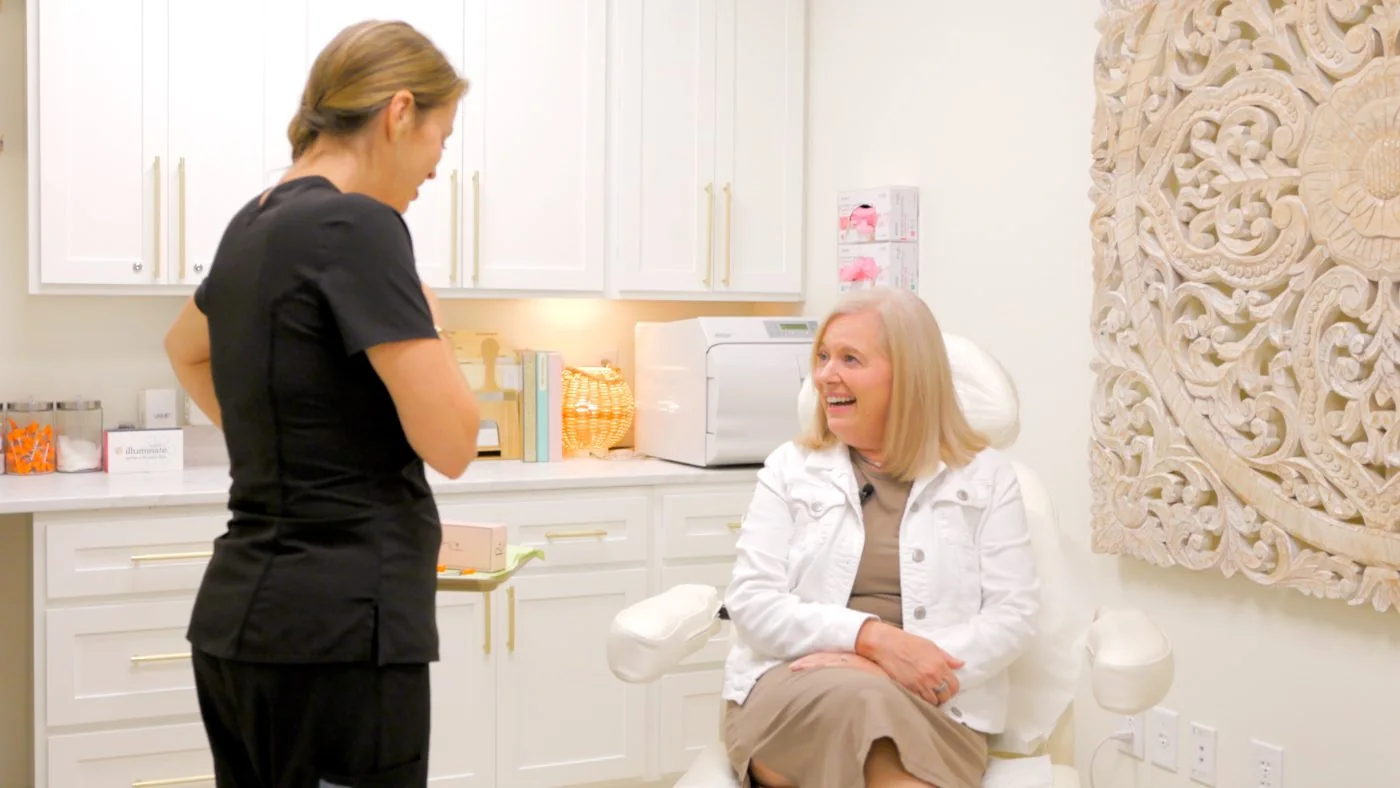
FDA-approved and compounded hormones
Compounded hormone preparations are not FDA approved. The FDA has not found evidence that they are safer or more effective than FDA-approved hormone therapy.
A review by the National Academies of Sciences, Engineering, and Medicine also found limited high-quality research supporting the safety and effectiveness of compounded bioidentical hormone therapy.
We’ll explain the formulation being considered, why it may be recommended, and what the available evidence tells us. You should feel comfortable asking about every part of your prescription.
What about estriol?
Estriol is an estrogen included in some compounded formulations. There are currently no FDA-approved medications containing estriol, and the FDA has not established that it is safer or more effective than approved estrogen treatments.
If estriol is part of a proposed prescription, ask your provider to explain why it is being considered.
Not sure what to ask about your hormones?
Start with what you’ve been noticing.
Select the symptoms that sound familiar. We’ll help you put together questions to bring to your appointment.
Select all that apply.
This tool is for education only. It cannot diagnose a hormone imbalance or determine whether you need treatment.
Your selections are not stored or sent. This tool does not replace a medical evaluation.

Understanding your hormone treatment options
There’s a lot of information about hormones online. Before choosing a treatment, it helps to understand:
- ✓Which symptoms you want to address.
- ✓What evidence supports the treatment.
- ✓Whether the medication is FDA approved or compounded.
- ✓How your health history affects the recommendation.
- ✓When you’ll check in to review your progress.
Bring your questions, even the ones that feel small. We want you to leave knowing what your next step is and why it makes sense for you.
No one had ever explained the difference between compounded and FDA-approved to me before. I finally understand what I’m taking, and why.
Vaginal dryness or painful sex? You have options.
These symptoms deserve attention, and treatment doesn’t always require systemic hormone therapy.
When over-the-counter options haven’t helped, a provider may consider low-dose vaginal estrogen, vaginal dehydroepiandrosterone (DHEA), or oral ospemifene, depending on your needs and medical history.
Local vaginal therapy and systemic hormone therapy serve different purposes. We’ll help you understand which approach fits your symptoms.
Explore our Vaginal Health Treatments and Urinary Incontinence services.

Your BHRT consultation in Charleston or Mount Pleasant
Your appointment starts with a conversation.
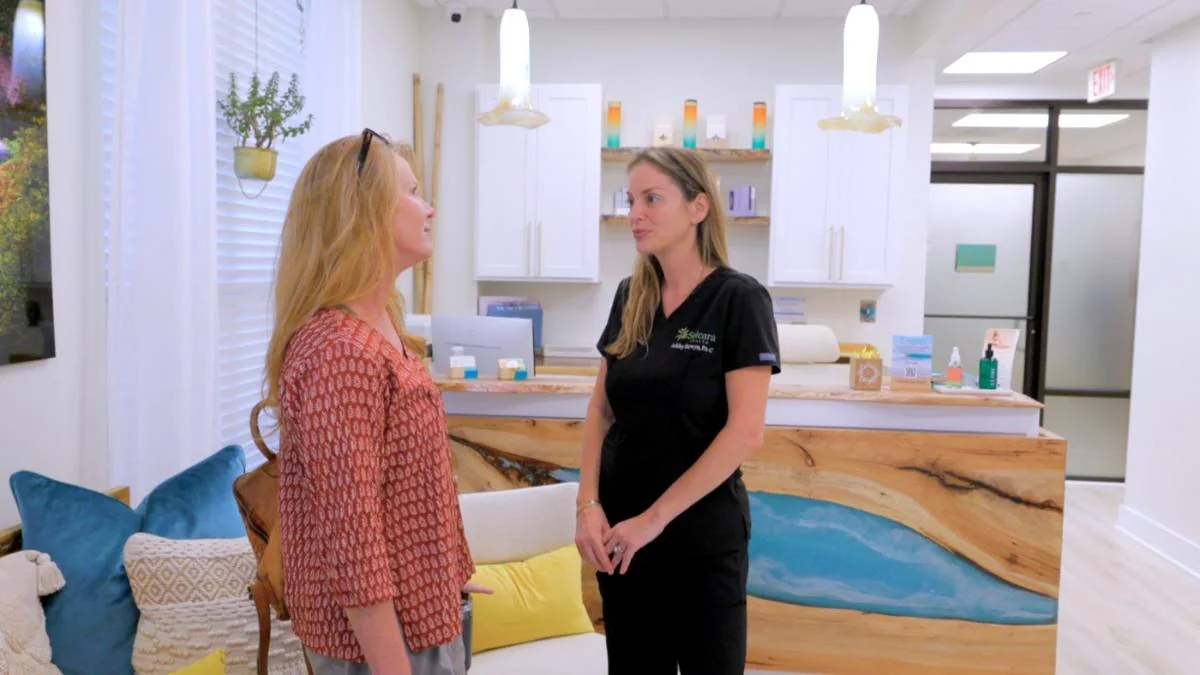
 Hormone consultation
We’ll review what has changed, how you’re feeling, your menstrual and menopause history, and your personal and family medical history. From there, we’ll discuss whether testing or treatment is appropriate.
If you’re already using hormones, bring the medication name, dose, how you take it, and how long you’ve been using it. Previous lab results can also be helpful.
Before you leave, you’ll understand the next steps and when to follow up.
Looking at the full picture
When symptoms may have another cause
Explore Thyroid Management, Persistent Fatigue, and Annual Full Panel Labs.
When vaginal or urinary symptoms are your main concern
Explore Vaginal Health Treatments, O-Shot®, and Gynecology & Fertility.
When you want a broader look at your health
Explore Advanced Diagnostic Testing, Cardiac Health, and Functional & Preventive Medicine.
If you’d like to read more before your appointment
Explore When to Start Hormone Therapy, What Hormone Therapy Labeling Changes Mean, and How to Choose a Menopause Specialist.


Care that keeps you involved
We want you to understand your care as it happens.
That means explaining your options clearly, making space for questions, and checking in on how treatment is working for you. If your needs change, we can revisit the plan together.
Meet Ashley Harwyn, PA-C
Founder, Solcara Health
Board Certified in Anti-Aging and Functional Medicine (A4M)
Ashley brings more than 15 years of medical experience to Solcara Health.
Her approach makes room for the person behind the symptoms: what you’re experiencing, what matters to you, and what you need help understanding.
She founded Solcara to offer thoughtful, personal care where patients have time to ask questions and take an active role in their health.
Get to Know Ashley →Bioidentical Hormone Replacement Therapy FAQs
Does hormone replacement therapy work?
Yes, for appropriate indications. Hormone therapy is an effective treatment for menopause-related hot flashes, night sweats, and vaginal symptoms. What it can help with depends on the treatment and your individual needs.
Is hormone therapy safe?
There isn’t one answer for everyone. Your age, medical history, time since menopause, and the medication being considered all matter. Your provider should explain both the potential benefits and risks before you begin.
Are bioidentical hormones FDA approved?
Some are. Bioidentical describes the hormone’s molecular structure, while FDA approval applies to the specific medication. Ask whether your prescription is an FDA-approved product or a compounded preparation.
Is compounded hormone therapy the same as bioidentical hormone therapy?
No. A bioidentical hormone can be found in either an FDA-approved medication or a compounded preparation. Compounded products are not FDA approved, and evidence has not established that they are safer or more effective than approved options.
What should I ask before starting BHRT?
Ask what you’re being prescribed, why it was chosen, whether it is FDA approved, and which pharmacy will fill it. You can also ask what changes to look for, which side effects to report, and when you’ll follow up.
What if vaginal dryness or discomfort is my main concern?
You may have options that focus specifically on vaginal symptoms. A consultation can help you understand whether local treatment or a broader approach is appropriate.
What should I know about estriol?
Estriol is used in some compounded hormones, but there are no FDA-approved medications containing it. If it’s included in your prescription, ask your provider about the reason for using it and the available evidence.
How long can I stay on hormone therapy?
There is no single timeline that applies to everyone. Continuing treatment should involve regular conversations about your symptoms, benefits, risks, and preferences. Your plan should be reviewed as your health and needs change.
Quick links
Explore every Solcara Health service, or reach our team directly.

Ready to understand your options?
You don’t need to know whether BHRT is right for you before reaching out. That’s what the consultation is for.
Schedule a visit at our Mount Pleasant office or at The Longevity Club in downtown Charleston.
Mount Pleasant
496 Bramson Ct, Suite 120
Mount Pleasant, SC 29464
Downtown Charleston
The Longevity Club
163 Rutledge Ave, Suite 202
Charleston, SC 29403
Request a Consultation
Tell us a little about what you’re experiencing and what you’d like help with. Our team will reach out to help schedule your visit.
Medical Information
This page provides general education and does not replace medical advice or establish a patient-provider relationship. Decisions about testing, treatment, or medication require an evaluation by a qualified, licensed healthcare provider who understands your personal and family medical history. Speak with your provider before starting, stopping, or changing treatment.
References
- The 2022 Hormone Therapy Position Statement of The North American Menopause Society. Menopause. 2022;29(7):767–794. doi:10.1097/GME.0000000000002028.
- U.S. Food and Drug Administration: Menopause.
- U.S. Food and Drug Administration: NASEM Study on the Clinical Utility of Treating Patients with Compounded Bioidentical Hormone Therapy.
Bioidentical Hormone Replacement Therapy FAQ's

Quick Links