

Reviewed by Ashley Harwyn, PA-C, ABAAHP | A4M Board Certified | Updated October 4, 2026
Remove the surface or heat beneath it? Here is how ablative and non-ablative laser resurfacing differ in results, recovery, and safety for your skin tone.
The choice comes down to what you want to change, how many days you can step away from work, and your skin tone. If loose skin is your main concern, read our skin tightening page. If it is spots, redness, or small veins, start with skin rejuvenation. This page is about the surface: lines, rough texture, sun damage, and scarring.
- Ablative resurfacing removes the top layers of skin so new skin can grow in. Non-ablative resurfacing heats the deeper layer and leaves the surface whole.[3]
- Ablative treatment brings the biggest change per session but needs time off: healing takes 3 to 10 days depending on depth, and dermatologists describe about 5 to 7 days at home.[2][1]
- Non-ablative treatment has little or no downtime, but it often takes 3 to 5 sessions, and results build slowly over 2 to 6 months after the last one.[1]
- Fractional treatment, which works in tiny columns and spares the skin between them, sits in the middle for both results and recovery.[3]
- Lasers can be used on darker skin, but darker skin is more prone to burns and dark marks afterward, so the settings, the timing, and sometimes the treatment itself change.[4][6]
- Resurfacing can make wrinkles and scars less visible. It cannot erase a scar, and it cannot do what a facelift does.[5][1]
Two ways to resurface: removing the surface or heating beneath it
Every kind of laser resurfacing injures the skin in a controlled way so it repairs itself. What separates the two families is where that injury happens. An ablative laser vaporizes the outer layers. Erbium lasers were developed for this job because the first carbon dioxide (CO2) lasers caused a high rate of side effects, including scarring, and erbium removes skin in a more precisely controlled way.[3] The American Society for Dermatologic Surgery (ASDS) notes that erbium causes fewer side effects than CO2.[2]
A non-ablative laser takes the opposite route. It heats the dermis, the deeper layer where collagen lives, while the epidermis on top stays intact.[3] With no open skin to heal, recovery is easy. The cost is that each session does less, so you need more of them and wait longer to see a change.[1]
There is also a middle path. Fractional resurfacing treats the skin in a grid of tiny columns and leaves untouched skin between them, which helps it heal faster. A review in the Journal of the American Academy of Dermatology describes fractional work as more effective than non-ablative treatment and quicker to recover from than full ablative resurfacing.[3] The Fotona platform we use has an erbium mode for ablative and fractional work and an Nd:YAG mode for non-ablative heating, so one consult can cover all three options.
The same review makes a point that is easy to miss. Neither non-ablative nor fractional treatment matches the results of full ablative resurfacing. They became more popular anyway, because their risks are limited and the improvement is acceptable to many people.[3] That trade is fine, as long as you make it knowingly.
Results versus recovery: comparing the depths
The rule of thumb: the more skin a laser removes or heats, the more it can change, and the longer and riskier the recovery. Here is how the three approaches compare.
| Approach | What happens to your skin | Recovery | When results show |
|---|---|---|---|
| Non-ablative | Heat reaches the deeper layer while the surface stays intact[3] | Little or no downtime, often 3 to 5 sessions[1] | Gradually, 2 to 6 months after the last session[1] |
| Fractional | Tiny columns of skin are treated, with healthy skin left between them[3] | Faster than full ablative resurfacing[3] | Stronger than non-ablative, milder than full ablative[3] |
| Full ablative (erbium) | Outer layers are removed across the treated area[3] | Healing in 3 to 10 days, about 5 to 7 days at home[2][1] | Firmer, less wrinkled skin within about 2 weeks of healing[1] |
Notes to bring to your consult
Tap each one that fits you. None of these decides anything on its own. They flag what Ashley needs to know to choose a safe depth and date.
Treat the recovery column as a range: healing depends on treatment depth and the laser used.[2] After full ablative work, the ASDS describes soaking the area, applying ointment, and re-dressing it every day while it heals.[2] Non-ablative sessions usually mean some redness and swelling for a few days rather than raw skin, which makes them easier to fit around a normal work week.
If you have a wedding or a trip on the calendar, the results column matters as much as the recovery one: ablative results arrive within weeks of healing, while non-ablative results take months.[1]
Erbium is also not the strongest tool that exists. A 2026 pooled analysis compared fractional CO2 lasers with erbium-based fractional lasers for acne scars across five studies and 130 people. Erbium was linked to a lower chance of more than 50 percent improvement, though the gap was no longer statistically clear when only randomized trials were counted. CO2 brought more pain and about three and a half extra days of downtime, and rates of dark marks afterward did not differ significantly.[7] In plain terms, erbium trades some strength for an easier recovery.
What resurfacing can improve, and where it stops
Resurfacing is used for wrinkles, crow's feet, sun-damaged skin, age spots, acne scars, and other scars.[2] Erbium in particular is used for superficial and moderately deep lines on the face, neck, chest, and hands.[2] These are surface and texture problems, and that is where resurfacing earns its place.
Scars deserve a straight answer. A laser can make a scar less noticeable, but it cannot remove it, and the change can take months to show, with little visible at first.[5] For acne scars specifically, the comparison studies are small and measure success in different ways, so even the best evidence comes with wide error bars.[7] Sometimes another option, such as microneedling, is the better first step. Our acne and acne scars page covers that wider picture.
Loose skin is the other common question. The American Academy of Dermatology (AAD) calls laser resurfacing the most effective procedure for tightening loose skin, yet it is also clear that no nonsurgical option gives the results of a facelift, eyelid surgery, or neck lift.[1] People with a lot of sagging skin may not see much benefit.[1] If firmness is what you are after, our skin tightening page explains the heat-based approach in detail.
Some problems belong elsewhere. Stretch marks have their own plan on our scars and stretch marks page. Melasma and other stubborn pigment are covered under hyperpigmentation, because pigment that keeps returning needs more than a laser. For a brighter surface with almost no downtime, a lighter laser facial may be enough.
Removes or heats layers of skin so it repairs itself, softening lines, rough texture, sun damage, and scars, at a depth chosen to match your goals, your downtime, and your skin tone.
A way to erase scars or stretch marks, a stand-in for a facelift, or a one-visit fix with no recovery. Deeper results cost healing time, and darker skin needs a more careful plan.
Skin tone, timing, and reasons to wait
Lasers can be used on every skin tone, but the AAD notes that darker skin is more prone to burns and dark marks afterward, and advises choosing a clinician experienced with darker skin.[4] The ASDS goes further for full resurfacing and says people with very dark skin usually are not good candidates.[2] Non-ablative fractional lasers have been reviewed specifically for darker skin. That review found them a favorable option for darker skin types, with the strongest evidence for acne, stretch marks, and rejuvenation, though high-quality studies in the darkest skin types are scarce.[6] For many patients with darker skin, that points toward fractional or non-ablative settings and a cautious start.
Timing matters in the Lowcountry, where strong sun is part of daily life. You cannot be treated over a tan or a sunburn, and treated skin needs protection from the sun until it heals.[5] After that, daily broad-spectrum, water-resistant sunscreen with SPF 30 or higher helps protect the result.[4] We ask patients to avoid direct sun for at least a week after resurfacing, so plan it for weeks without beach days or boating.
Active acne is a reason to hold off.[2] So are pregnancy, a skin infection, and certain medications.[1] Some medicines make skin more sensitive to laser light, so bring a full list of what you take, including supplements.[4] Before treatment, the AAD advises stopping retinoid or glycolic acid products for 2 to 4 weeks, quitting smoking for at least 2 weeks, and taking medicine to prevent cold sores if you get them.[5]
Not sure which depth fits your skin and your schedule? Call 843-981-0870. Ashley will weigh your skin tone, your goals, and your calendar, then lay out the ablative, fractional, and non-ablative options side by side, with the recovery each one asks of you.
Your resurfacing visit, from numbing to the first week
Every plan starts with a consult. Ashley Harwyn, PA-C, board certified in anti-aging and functional medicine (A4M, ABAAHP), looks at your skin, asks about past reactions, scarring, cold sores, and medications, then recommends a mode based on your goals and your calendar. Laser results depend largely on the skill of the person doing the treatment, so that planning matters.[4] Visits are available at our Mount Pleasant office on Bramson Court and at The Longevity Club on Rutledge Avenue in downtown Charleston.
On treatment day, we numb the skin with a topical cream or cool it with cold air, depending on the depth. Most sessions take 15 to 30 minutes. Expect redness and swelling for several days afterward. The most aggressive ablative treatments can mean up to about 5 to 7 days of downtime, which lines up with the AAD's guidance on full resurfacing.[1] You go home with written aftercare and ALASTIN recovery products for the healing skin.
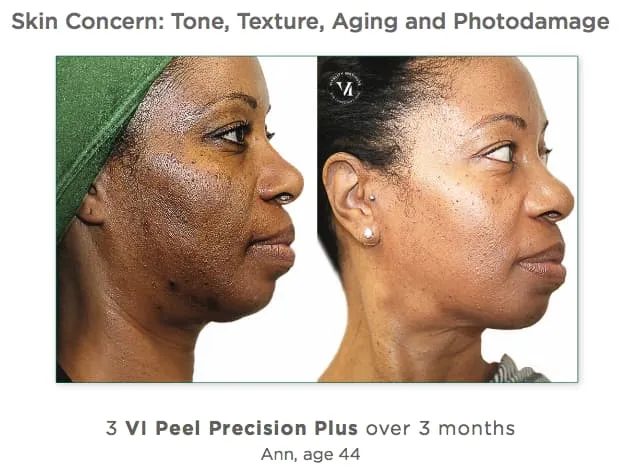
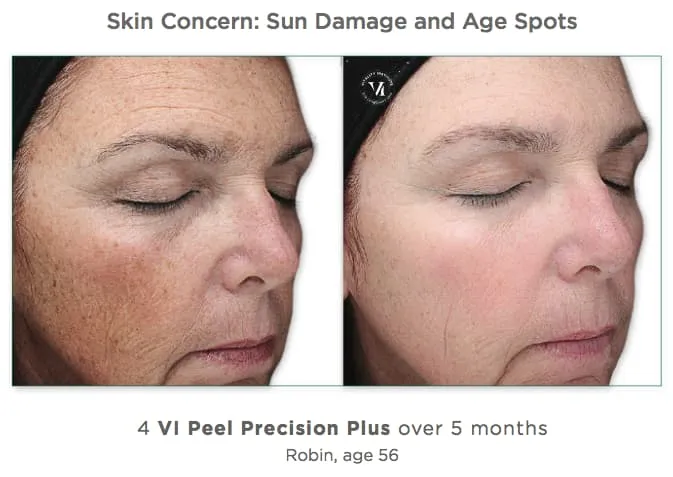
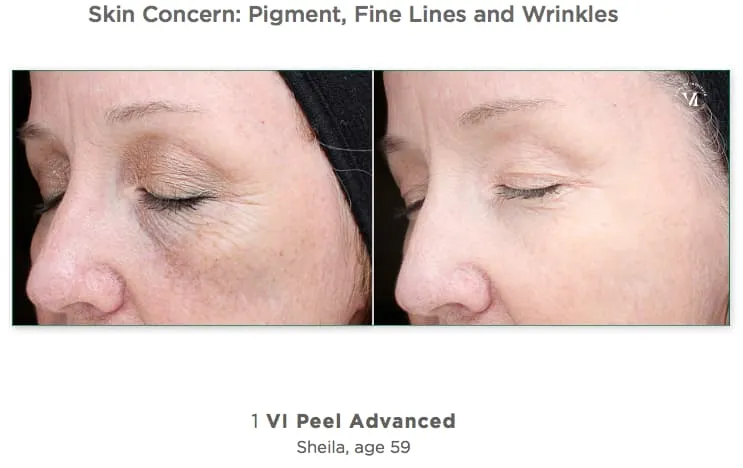
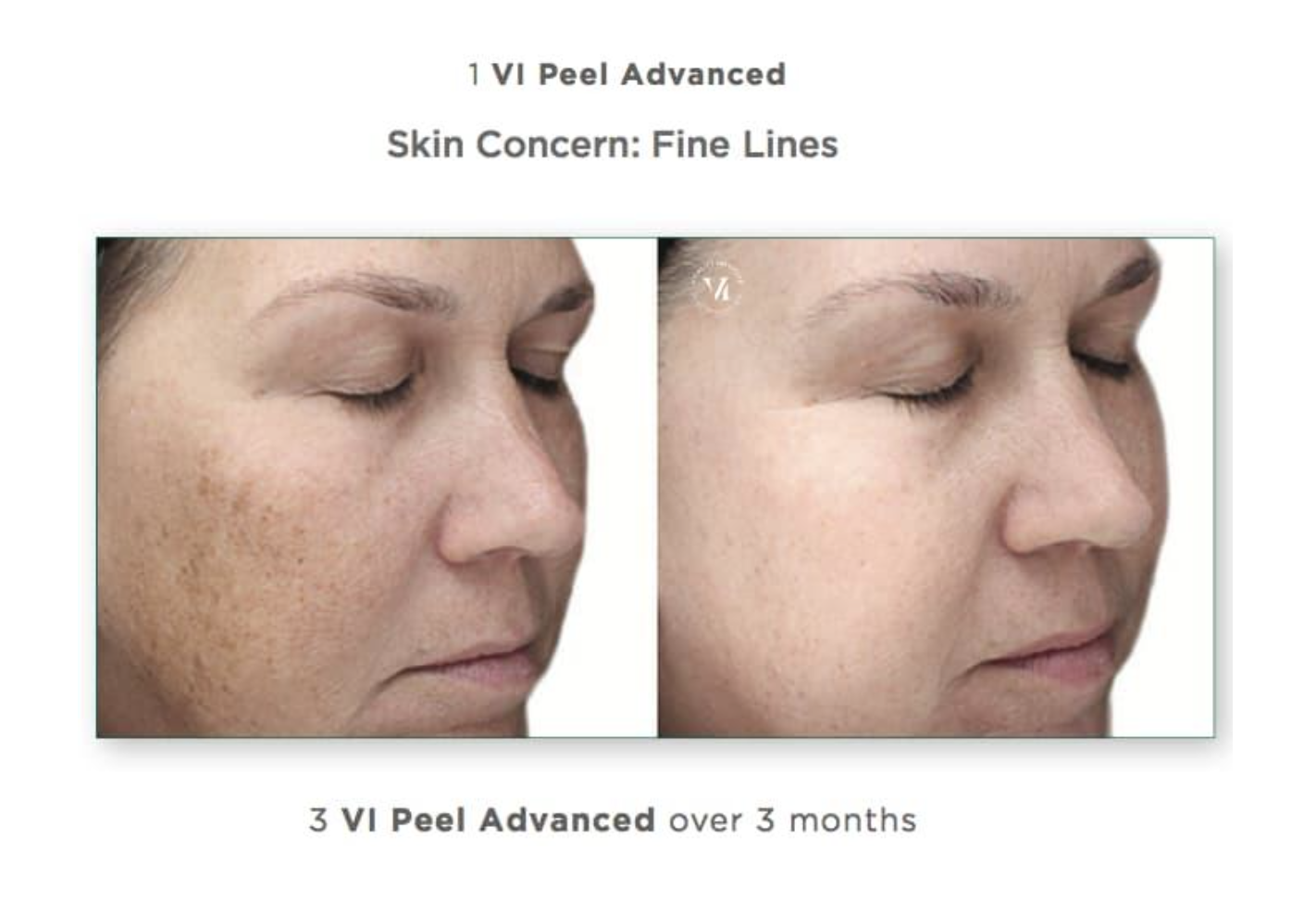
Some people see a difference after one session. Dermatologists often schedule laser work as a series to get the most improvement, and we usually plan the same way.[5] Resurfacing can be combined with a chemical peel or with platelet-rich plasma (PRP), an add-on with limited evidence for facial aging that our laser facial page discusses. At your consult, you can also ask to see before-and-after photos of our resurfacing patients.
Laser Services
How every laser treatment we offer fits together. Read Laser Services.
Skin Tightening
Heat-based firming for loose or crepey skin. Read Skin Tightening.
Skin Rejuvenation
Laser care for spots, redness, and small veins. Read Skin Rejuvenation.
Acne and Acne Scars
Treating active breakouts and the scars they leave. Read Acne and Acne Scars.
 Ashley Harwyn, PA-C
PA-C, ABAAHP · Founder, Solcara Health
Online
Tap a question to ask
Pick the depth that fits your life
Book a resurfacing consult with Ashley. Bring your skin products, your medicines, and any dates you need to look your best.
BOOK A CONSULTATION →Or call 843-981-0870
Ashley Harwyn, PA-C, ABAAHP
Founder, Solcara Health · Diplomate, American Board of Anti-Aging Health Practitioners (ABAAHP)
Ashley has practiced medicine for more than fifteen years. Her path into it began at home, with a family member born with a congenital heart defect and a childhood spent watching how much the quality of a clinician's attention could change the shape of a life. She has since practiced across a range of settings, including medical mission work in Uganda, before founding Solcara to build the kind of practice she kept wishing existed, one that treats patients as whole people and tells them the truth about what the evidence does and does not support.
Full bio →References
American Academy of Dermatology pages on firming sagging skin, conditions lasers treat, and laser scar treatment; the American Society for Dermatologic Surgery laser resurfacing page; and peer-reviewed reviews in the Journal of the American Academy of Dermatology, the Journal of Clinical and Aesthetic Dermatology, and Lasers in Medical Science, each accessed October 4, 2026.
- American Academy of Dermatology. Many ways to firm sagging skin. AAD. aad.org
- American Society for Dermatologic Surgery. Laser resurfacing. ASDS. asds.net
- Alexiades-Armenakas MR, Dover JS, Arndt KA. The spectrum of laser skin resurfacing: nonablative, fractional, and ablative laser resurfacing. Journal of the American Academy of Dermatology. 2008. pubmed.ncbi.nlm.nih.gov
- American Academy of Dermatology. Skin conditions that lasers can treat. AAD. 2021. aad.org
- American Academy of Dermatology. 10 things to know before having laser treatment for your scar. AAD. aad.org
- Kaushik SB, Alexis AF. Nonablative fractional laser resurfacing in skin of color: evidence-based review. Journal of Clinical and Aesthetic Dermatology. 2017. pmc.ncbi.nlm.nih.gov
- Song X, Zhi BW. Comparative efficacy and safety of fractional carbon dioxide and erbium-based fractional lasers for atrophic acne scars: a systematic review and meta-analysis. Lasers in Medical Science. 2026. pubmed.ncbi.nlm.nih.gov
Medical Disclaimer: This page is for educational and informational purposes only and does not constitute medical advice, and reading it does not create a patient-provider relationship. It describes general medical information and categories of care, not a recommendation that any individual start, stop, or change any test, treatment, or medication. Any diagnosis or treatment decision requires evaluation by a qualified, licensed clinician who knows your personal and family history. Consult a qualified healthcare provider before making medical decisions. Information reflects sources available as of October 4, 2026.
Ashley Harwyn, PA-C, ABAAHP, is a Diplomate of the American Board of Anti-Aging Health Practitioners (ABAAHP) through A4M and the founder of Solcara Health. Solcara serves South Carolina from Downtown Charleston (163 Rutledge Ave, Ste 202, The Longevity Club) and Mt. Pleasant (496 Bramson Ct, Ste 120).
Skin Resurfacing FAQ's
Quick Links