

Reviewed by Ashley Harwyn, PA-C, ABAAHP | A4M Board Certified | Updated October 4, 2026
PRP can add modest hair density for pattern hair loss, but it is not an approved treatment and it cannot fix every kind of thinning. Here is what the research supports.
So a sensible PRP plan opens with a question many ads skip: why is your hair thinning? Thyroid problems, low iron or other nutrients, heavy shedding after childbirth or illness, autoimmune patches, and scarring conditions can all look like ordinary thinning, and several of them improve once the cause is treated.[2] We sort that out first, often with comprehensive lab work, and only then decide whether PRP adds anything for you. For how PRP is used more broadly, see our PRP overview.
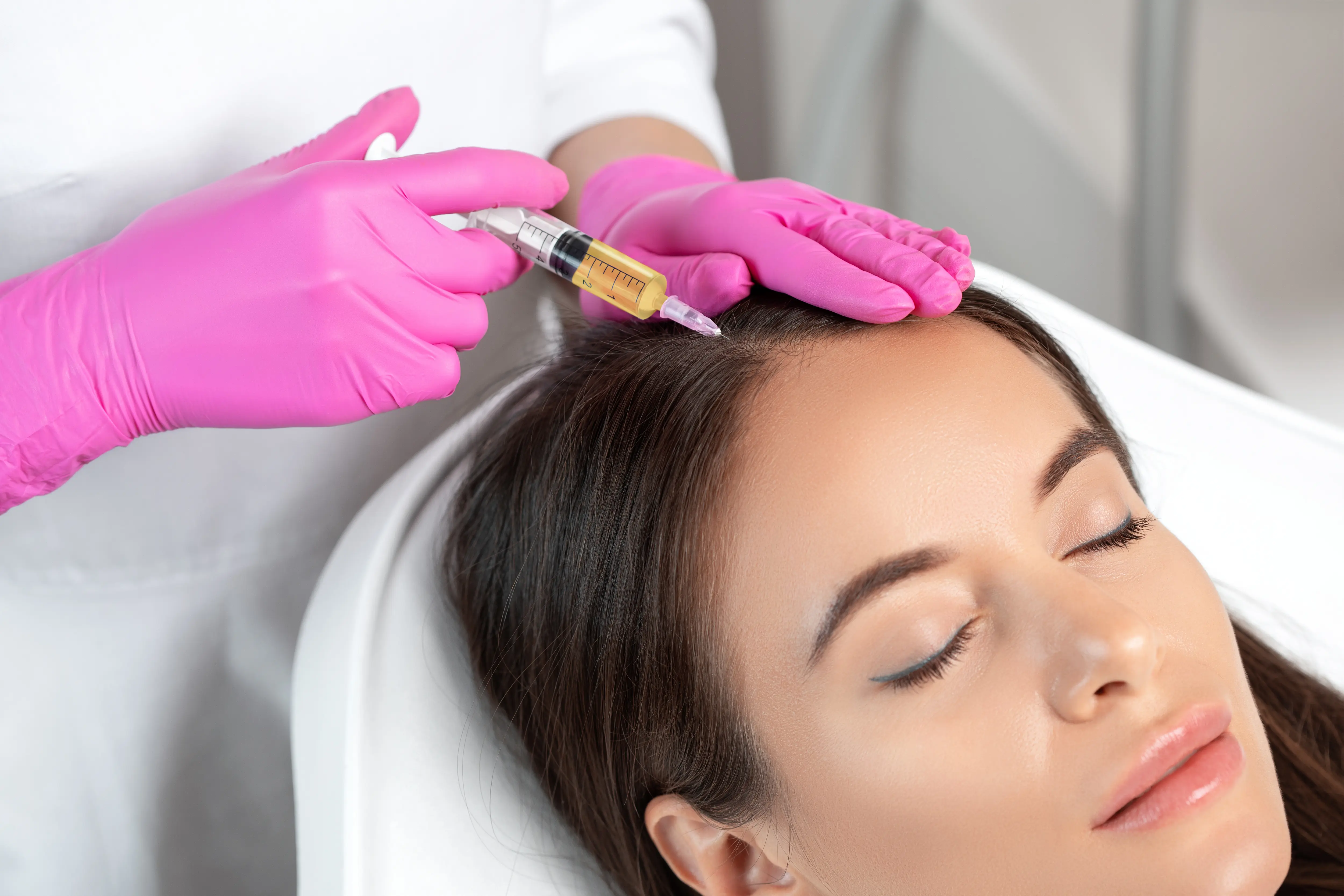
- PRP for hair is your own concentrated plasma, injected into thinning parts of the scalp after a blood draw and a spin in a centrifuge.[1]
- The research centers on androgenetic alopecia (male and female pattern hair loss), which is the most common cause of hair loss worldwide.[2][3]
- A 2024 meta-analysis of 13 randomized trials found PRP added about 27.6 hairs per square centimeter over placebo, but the trials were highly inconsistent and showed signs of publication bias.[3]
- PRP is not an FDA-approved hair loss treatment. Finasteride and minoxidil are, and PRP is usually framed as an add-on to them rather than a replacement.[6][7]
- In the trials, the most common side effect was brief scalp pain, and no serious adverse events were tied to PRP, though many studies tracked side effects poorly.[3][4]
- Hair grows slowly. Expect a series of sessions, several months before judging, and maintenance visits if it helps.[1]
Why the reason for your thinning matters more than the treatment
Hair loss is a symptom, not a diagnosis. The American Academy of Dermatology (AAD) puts it simply: effective treatment begins with finding the cause.[1] A careful evaluation covers when the loss started and how it has spread, a close look at the scalp and nails, and a gentle pull test, with blood work or a scalp biopsy when the picture is unclear.[1]
The most common cause is hereditary hair loss, known medically as androgenetic alopecia. It affects both men and women, and it is the type of hair loss PRP has been tested on most.[2][3] Several other causes can look much the same in the mirror, and each one calls for a different plan:
- Thyroid disease can thin the hair, and treating the thyroid can reverse that loss.[2]
- Too little iron, biotin, protein, or zinc can cause noticeable loss, and hair can regrow once the shortfall is corrected.[2]
- Heavy shedding a few months after giving birth, an illness, or an operation usually settles, with normal fullness returning within about 6 to 9 months.[2]
- Alopecia areata happens when the immune system attacks hair follicles.[2]
- Scarring alopecia destroys follicles, and a destroyed follicle cannot grow hair.[2]
- Hair pulled tightly back day after day can lead to permanent loss.[2]
Plasma injections does not correct an underactive thyroid or an iron shortfall, and a follicle lost to scarring cannot grow hair again, whatever is placed near it.[2] That is why we evaluate before we treat. When labs are needed, annual full panel labs give a broad starting point, a thyroid result that comes back off is handled through thyroid management, and nutrient gaps go to nutritional therapy rather than guesswork.
What studies show PRP does for pattern hair loss
The most focused recent analysis of PRP for androgenetic alopecia, published in 2024, combined 13 randomized trials that compared PRP with placebo. On average, PRP added about 27.6 hairs per square centimeter of scalp, with a wide uncertainty range of roughly 14 to 41.[3] That is a real signal, but it is a count taken in a small marked patch of scalp, not a promise of a fuller head of hair.
The same authors were frank about the limits. Results varied so much from trial to trial that consistency was very poor, the pattern of published studies pointed clearly to publication bias, and they graded the hair density evidence as low quality. They could not confirm any gain in hair shaft thickness.[3] A separate review in Blood Transfusion, covering 27 controlled trials of pattern hair loss and alopecia areata, landed in a similar place: more density than saline injections over the medium term, an unclear effect on hair count, and evidence of mostly low quality.[4]
Women are well represented in this research. A 2021 meta-analysis focused on female pattern hair loss drew on 42 studies, 16 of them randomized trials, and found better hair density with PRP than with control treatments.[5] Those authors also said treatment protocols still need to be standardized and that large randomized trials are needed to confirm the effect.[5]
Part of the uncertainty is that “PRP” is not one standard product. Trials have used activated and non-activated plasma and very different schedules, and one review notes there is still no standardized way to prepare or apply it.[4][6] Most trials in the 2024 analysis injected monthly.[3] So if any clinic quotes you a precise success rate, ask which study it came from and which preparation that study used.
A modest average gain in hair density for pattern hair loss in men and women, made from your own blood, with mostly brief and mild side effects, used alongside proven medicines and judged over months.
Promises to end hair loss or regrow a full head of hair, offers to treat any thinning without a diagnosis, and claims of FDA approval. It cannot revive follicles lost to scarring or fix a thyroid or iron problem.
Where PRP fits next to proven hair loss medicines
PRP rarely belongs on its own. A published review of the research recommends it as a supporting treatment for androgenetic alopecia and encourages patients to keep using their topical or oral medicine alongside it.[6] Here is how the main options compare.
| Option | Approval status for hair loss | What the evidence supports | Time before judging |
|---|---|---|---|
| Minoxidil (topical) | FDA-approved for androgenetic alopecia[6] | Helps early hair loss; cannot regrow an entire head of hair[1] | About 6 to 12 months[1] |
| Finasteride (oral) | FDA-approved for male pattern hair loss[1] | Can slow loss and stimulate growth; loss returns if stopped[1] | About 4 months[1] |
| PRP injections | Not an FDA-approved hair loss treatment[6][7] | Modest density gain over placebo; low-quality evidence[3][4] | Monthly for 3 months, then every 3 to 6 months[1] |
Your hair history, in six taps
Tap each line that matches your experience. This does not tell you what kind of hair loss you have. It builds a short list of points to cover with Ashley at your first appointment.
Look across the rows and one pattern stands out: every option works slowly, and each works only while you keep it up. If you stop minoxidil, you lose its benefits, and once you stop finasteride, hair loss starts again.[1] PRP follows the same logic, which is why published schedules include ongoing maintenance sessions.[1][6]
Women have a few more choices to discuss. The AAD lists spironolactone as a possible option for female pattern hair loss, and a dermatologist may prescribe finasteride to a woman with hereditary hair loss who cannot get pregnant.[1]
A word on regulation, because ads often blur it. The FDA reviews the kits and machines used to prepare PRP. The device category those systems fall under is defined as preparing platelet-rich plasma to mix with bone graft, with no mention of hair loss.[7]
Noticing more scalp than you used to? Find the cause before you pick a treatment. Call 843-981-0870 to book a hair loss visit with Ashley. She will examine your scalp, go over your history and medicines, order labs if they are needed, and only then talk through whether PRP has a place in your plan.
Inside a PRP scalp session at Solcara
A session starts with a routine blood draw from your arm. The tube goes into a centrifuge, which spins it until the platelet-rich plasma separates from the red blood cells, the same basic steps the AAD describes.[1] We activate the plasma with calcium chloride before injecting it. Many published protocols add an activator such as calcium chloride or thrombin, though trials have used both activated and non-activated plasma, so research has not shown one version to be clearly better.[4][6]
Scalp injections can sting, and brief pain at the injection site is the side effect people in trials report most.[3][6] To keep you comfortable, we use numbing cream, a scalp nerve block, or both. The plasma is then placed in small injections across the thinning areas. Some patients add scalp microneedling at the same visit. That step is optional, and we will talk through whether it makes sense for you.
A typical plan at Solcara is 3 to 6 sessions spaced 4 to 6 weeks apart, followed by maintenance visits. That fits published schedules, which commonly start with monthly sessions and then repeat treatment every 3 to 6 months.[1][6]
You can be treated at either of our offices: 496 Bramson Ct, Suite 120 in Mount Pleasant, or The Longevity Club at 163 Rutledge Ave, Suite 202, in downtown Charleston. Your treatment is with Ashley Harwyn, PA-C, who is board certified in anti-aging and functional medicine (A4M) and holds ABAAHP certification.
Recovery, side effects, and when to expect change
Aftercare is simple, with a few short-term limits. For 2 to 3 days, skip harsh hair products, heat styling, and tight styles, and wash with a gentle shampoo. For the first 24 hours, avoid strenuous exercise and smoking.
Expect some tenderness. Swelling, bruising, redness, and itching where the needles went in can also happen, and they usually fade on their own. Infection, scarring, and allergic reactions are rare. In the trials pooled by reviewers, no serious adverse events were linked to PRP, but many studies did not set out to track side effects, and reporting was often incomplete.[4] So the safety record is reassuring rather than complete. Before treatment, tell us about every medicine and supplement you take, including blood thinners, and any bleeding or blood disorder you have.
Judge PRP after a full first series, not after one visit. If it helps, maintenance sessions keep it going, and you will likely do best combining it with a proven medicine.[1][6] If nothing changes after a full series, we will talk about other options rather than simply adding sessions.
Annual Full Panel Labs
Checks for the thyroid, iron, and other issues that can drive hair loss. Read Annual Full Panel Labs.
Thyroid Management
For thinning that traces back to an over- or underactive thyroid. Read Thyroid Management.
Platelet-Rich Plasma (PRP)
How PRP is prepared and where else we use it. Read Platelet-Rich Plasma (PRP).
Nutritional Therapy
For hair loss tied to low iron, protein, or other nutrients. Read Nutritional Therapy.
If you are weighing the cost
 Ashley Harwyn, PA-C
PA-C, ABAAHP · Founder, Solcara Health
Online
Tap a question to ask
Find out why your hair is thinning first
Book a hair loss visit with Ashley to sort out the cause, review the proven options, and decide together whether PRP belongs in your plan.
BOOK A CONSULTATION →Or call 843-981-0870
Ashley Harwyn, PA-C, ABAAHP
Founder, Solcara Health · Diplomate, American Board of Anti-Aging Health Practitioners (ABAAHP)
Ashley has practiced medicine for more than fifteen years. Her path into it began at home, with a family member born with a congenital heart defect and a childhood spent watching how much the quality of a clinician's attention could change the shape of a life. She has since practiced across a range of settings, including medical mission work in Uganda, before founding Solcara to build the kind of practice she kept wishing existed, one that treats patients as whole people and tells them the truth about what the evidence does and does not support.
Full bio →References
American Academy of Dermatology hair loss pages, three systematic reviews and meta-analyses of PRP for alopecia, a published PRP treatment-protocol review, and the FDA product classification for PRP preparation devices, each accessed October 4, 2026.
- American Academy of Dermatology. Hair loss: Diagnosis and treatment. AAD. 2022. aad.org
- American Academy of Dermatology. Hair loss: Who gets and causes. AAD. Accessed 2026. aad.org
- Kieling L, Konzen AT, Zanella RK, Valente DS. Is autologous platelet-rich plasma capable of increasing hair density in patients with androgenic alopecia? A systematic review and meta-analysis of randomized clinical trials. Anais Brasileiros de Dermatologia. 2024. pmc.ncbi.nlm.nih.gov
- Cruciani M, Masiello F, Pati I, Marano G, Pupella S, De Angelis V. Platelet-rich plasma for the treatment of alopecia: a systematic review and meta-analysis. Blood Transfusion. 2023. pmc.ncbi.nlm.nih.gov
- Zhou S, Qi F, Gong Y, Zhang C, Zhao S, Yang X, He Y. Platelet-Rich Plasma in Female Androgenic Alopecia: A Comprehensive Systematic Review and Meta-Analysis. Frontiers in Pharmacology. 2021. pmc.ncbi.nlm.nih.gov
- Stevens J, Khetarpal S. Platelet-rich plasma for androgenetic alopecia: A review of the literature and proposed treatment protocol. International Journal of Women's Dermatology. 2019. pmc.ncbi.nlm.nih.gov
- US Food and Drug Administration. Product Classification: Platelet and plasma separator for bone graft handling (product code ORG). FDA. Accessed 2026. accessdata.fda.gov
Medical Disclaimer: This page is for educational and informational purposes only and does not constitute medical advice, and reading it does not create a patient-provider relationship. It describes general medical information and categories of care, not a recommendation that any individual start, stop, or change any test, treatment, or medication. Any diagnosis or treatment decision requires evaluation by a qualified, licensed clinician who knows your personal and family history. Consult a qualified healthcare provider before making medical decisions. Information reflects sources available as of October 4, 2026.
Ashley Harwyn, PA-C, ABAAHP, is a Diplomate of the American Board of Anti-Aging Health Practitioners (ABAAHP) through A4M and the founder of Solcara Health. Solcara serves South Carolina from Downtown Charleston (163 Rutledge Ave, Ste 202, The Longevity Club) and Mt. Pleasant (496 Bramson Ct, Ste 120).




PRP Hair Restoration FAQ's

Quick Links
