

Reviewed by Ashley Harwyn, PA-C, ABAAHP | A4M Board Certified | Updated October 4, 2026
ZO is a professional line, but most of it is not prescription. Here is how the shelf is regulated, which ingredients the evidence backs, and how we choose your products.
That split matters more than the brand name. It tells you which claims have had FDA review, which products need a clinician, and which ones are mainly about how your skin looks and feels. Below: how the line is regulated, which ingredients have real evidence, and what the first two months look like.
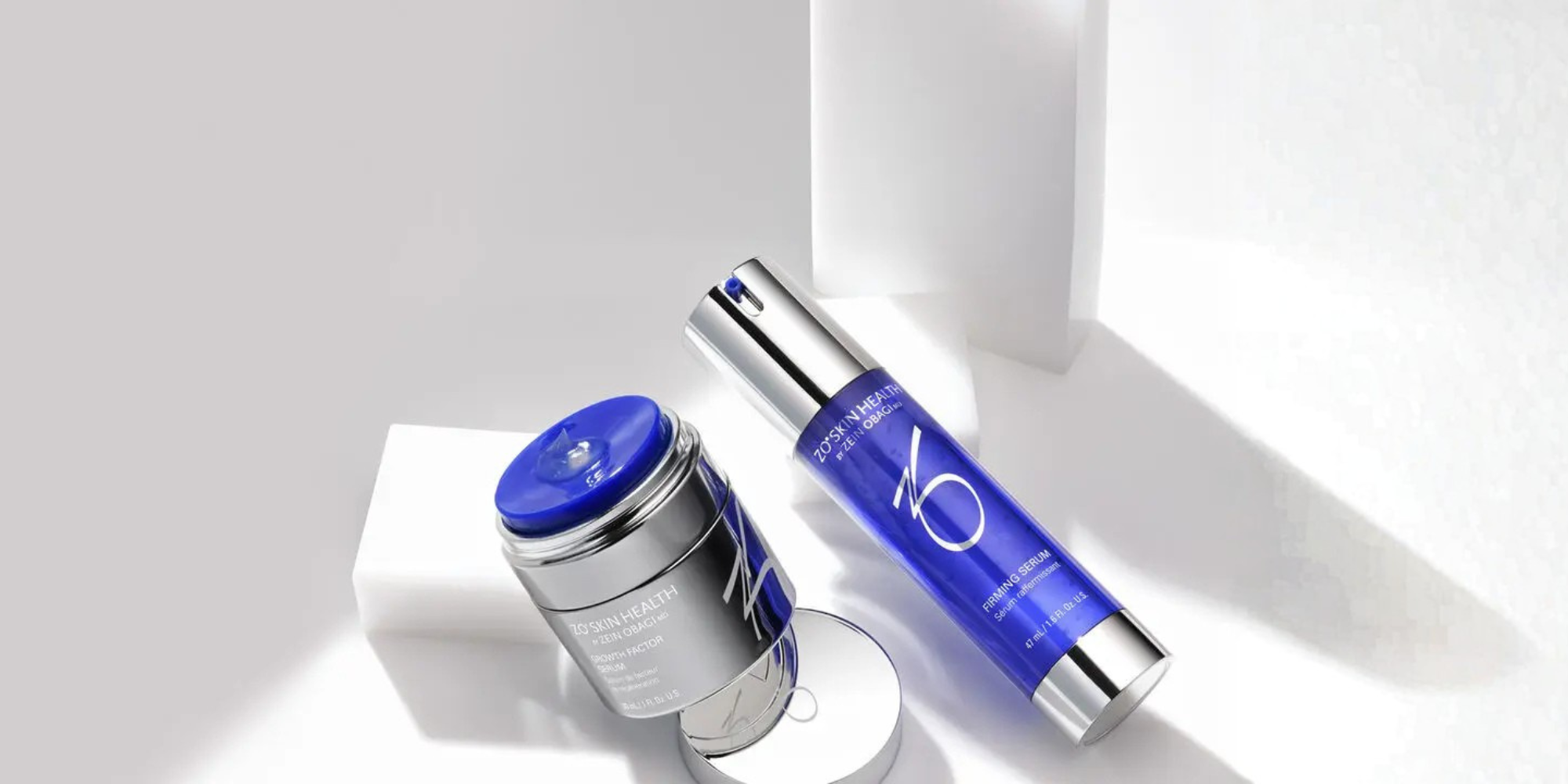
- ZO Skin Health was created by dermatologist Zein Obagi, MD, and is sold through skin health professionals, which is why you choose products with us rather than off a store shelf.
- Calling the whole line “prescription strength” is not accurate. In the National Library of Medicine's DailyMed database, ZO's prescription labels are its hydroquinone creams, and its sunscreens and acne products carry over-the-counter drug labels.[2][3]
- Since the 2020 CARES Act, over-the-counter skin lighteners without FDA approval cannot legally be sold. Hydroquinone in the US now comes by prescription.[1]
- ZO's 4% hydroquinone creams are prescription products that have not gone through FDA approval. The FDA lists Tri-Luma as the only FDA-approved drug that contains hydroquinone.[1][3]
- Retinol is a gentler, over-the-counter cousin of prescription tretinoin, which is the best-studied retinoid for aging skin. Retinoids should not be used during pregnancy.[5][6]
- Daily broad-spectrum sunscreen, SPF 30 or higher, helps prevent early wrinkles and age spots, and it is the one step we never leave out.[7]
What ZO Skin Health is, and why you get it through a practice
ZO Skin Health is a skin care company founded by Zein Obagi, MD, a dermatologist. The company sells through skin health professionals, such as medical practices and medspas, rather than in retail stores. The idea is that someone looks at your skin before you buy, so the products match the problem you actually have.
That is a sales model, not a quality guarantee. A product does not become stronger or safer because a practice sells it. What a practice adds is judgment: knowing that a melasma patch, a sun spot, and a mark left behind by acne can look alike but need different plans, and knowing when a spot should be checked by a dermatologist before anyone tries to fade it.
ZO makes products for many skin types and concerns, including oil and breakouts, uneven tone, and sun protection. A home routine can also support in-office care, such as our facials and chemical peels, so both work toward the same goal. No single line suits every person, though, and we would rather tell you that a simpler or cheaper product will do the job than sell you a step you do not need.
Prescription, over-the-counter, or cosmetic: sorting the ZO shelf
US law sorts skin products by what they are meant to do. The FDA defines a cosmetic as something meant to cleanse, beautify, or change how you look. A drug is meant to treat or prevent disease, or to affect the structure or function of the body.[4] Cosmetics, apart from color additives, do not need FDA approval before they go on sale. Drugs must either be approved or follow the FDA's rules for over-the-counter products.[4] Some products are both. A moisturizer with sunscreen, for example, counts as a cosmetic and a drug.[4]
The ZO line spans all three groups. We checked every ZO drug label in DailyMed, the federal database of drug labels, on October 4, 2026. The prescription labels were all hydroquinone products. The sunscreens, the salicylic acid and benzoyl peroxide acne products, and several kits carried over-the-counter drug labels.[2] Cleansers, serums, and creams that make no drug claims are sold as cosmetics.[4]
| What is on the ZO shelf | What the evidence or label supports | How it is sold | Source |
|---|---|---|---|
| Broad-spectrum sunscreens | Help prevent early wrinkles and age spots from too much UV | Over-the-counter drug | [2][7] |
| 4% hydroquinone creams | Lighten dark spots; can irritate skin and raise sunburn risk | Prescription only, not FDA-approved | [1][3] |
| Retinol products | A milder retinoid, reported as about 20 times less potent than tretinoin | Cosmetic, or over-the-counter when paired with an acne drug | [2][4][5][6] |
| Salicylic acid and benzoyl peroxide products | Acne ingredients sold under the FDA's over-the-counter drug rules | Over-the-counter drug | [2] |
| Cleansers, serums, and “brightening” or “firming” creams | Benefits are the maker's claims, not an FDA finding | Cosmetic | [4] |
What to mention at your skin visit
Tap each line that fits you. Nothing here diagnoses a skin problem. It is a short list to bring to your appointment so your routine is built around it.
Here is how to use that table. A claim on a cosmetic label, such as “renews” or “restores,” has not been reviewed by the FDA before sale. That does not make those products useless. A routine you enjoy is a routine you keep. It does mean the strongest evidence sits with a short list of ingredients: sunscreen, retinoids, and, for certain kinds of dark spots, prescription lightening creams.
Put sunscreen, retinol, and acne products into one plan chosen for your skin, and, by prescription, add a hydroquinone cream for certain dark spots, with follow-up so the plan changes when your skin does.
Being prescription strength across the board, rebuilding skin through cosmetic serums, or suiting every skin type by default. Only the hydroquinone creams are prescription, and none of them is FDA-approved.
Hydroquinone after the 2020 law change
Hydroquinone is the ingredient people most often ask about, and the rules changed. Under the federal CARES Act, starting September 23, 2020, over-the-counter skin lightening products without FDA approval had to come off the market.[1] The FDA states that there are no FDA-approved or otherwise legally marketed over-the-counter skin lighteners.[1] So drugstore fade creams with hydroquinone are no longer legal to sell, and hydroquinone in the US now comes by prescription.
There is a second detail that most product pages skip. ZO's Pigment Control Creme lists 4% hydroquinone, carries an “Rx only” label, and is marketed in a category DailyMed calls “unapproved drug other.”[3] In plain terms, it is a prescription product that has not been through FDA approval. The FDA names Tri-Luma, a prescription melasma cream, as the only FDA-approved drug that contains hydroquinone.[1]
Hydroquinone also has real risks. The FDA has received reports of skin rashes, facial swelling, and ochronosis, a lasting discoloration of the skin, from hydroquinone skin lighteners, and it notes that ochronosis may be permanent.[1] The ZO label warns that its formula can raise your chance of sunburn, so it calls for sunscreen, protective clothing, and limited sun while you use it and for a week after.[3] The same label lists sodium metabisulfite, a sulfite that can cause serious allergic-type reactions, including asthma attacks, in some people.[3] Tell us if you have a sulfite allergy or asthma.
Because of these risks, hydroquinone belongs under a clinician's eye, with a clear plan for how long to use it and when to check in. It also helps to know which kind of dark spot you have first, since melasma, sun spots, and post-acne marks do not respond the same way. Our hyperpigmentation page goes deeper on those differences.
Using a fade cream and not sure what is in it? Bring the tube to your visit, or call 843-981-0870 first. We will read the label with you, look at the spots it is meant to treat, and say plainly whether it belongs in your routine.
Retinol, retinoids, and the first few weeks
Retinoids are vitamin A ingredients, and they are among the few skin care ingredients with solid evidence for aging skin. The American Academy of Dermatology (AAD) explains that prescription retinoids include tretinoin, tazarotene, and trifarotene, while retinol is a retinoid sold over the counter.[5] Tretinoin is the retinoid studied more than any other for skin aging.[6] Retinol has to be converted in the skin to work, and one review reports it as about 20 times less potent than tretinoin.[6] That is why retinol tends to be gentler, and also why its effects tend to be smaller.
The ZO line uses retinol, not prescription tretinoin. If your goals call for a prescription retinoid, that is a separate conversation about a separate product, and we will have it with you.
Expect an adjustment period. The most common side effect of topical retinoids is a “retinoid reaction” of itching, burning, redness, and peeling, and it usually shows up in the first few weeks.[6] AAD dermatologists suggest starting with a gentle formula every other night and building up slowly, using it at night, and wearing sun protection every day.[5] In darker skin tones, irritation can leave dark marks behind, so going slowly matters even more.[5]
Two hard stops. The AAD says retinoids should not be used during pregnancy.[5] And if your skin is already very red or inflamed, retinoids are usually not the place to start.[5] Tell us if you are pregnant, planning a pregnancy, or breastfeeding, and we will build a routine that leaves these products out.
How we build your ZO routine, and what to expect by week six
Your first visit starts with your skin and your goals, not a product list. We look at your skin type, what you already use, what has irritated you before, your sun habits, and any medicines or pregnancy plans that change what is safe. Then we pick the fewest products that cover the job, usually a cleanser, a treatment step, a moisturizer if you need one, and sunscreen.
Sunscreen is the step we will not drop. The AAD recommends a broad-spectrum, water-resistant sunscreen with SPF 30 or higher, reapplied about every two hours, or after swimming or sweating.[7] It notes that sunscreen helps prevent early skin aging, such as wrinkles and age spots, caused by too much unprotected UV.[7] Every other step works better when this one is in place, and ZO's sunscreens are regulated as over-the-counter drugs, the same as any other sunscreen.[2][7]
Results take patience. Most people notice small changes in the first weeks and clearer improvement over about six weeks, and pigment and texture goals often take longer. When something stings or flares, we adjust the routine instead of asking you to push through. Once your routine is set, you can restock at a visit or through our online ZO store.
Visits are with Ashley Harwyn, PA-C, who is board certified in anti-aging and functional medicine (A4M) and holds the ABAAHP credential. You can see her at our office at 496 Bramson Ct, Ste 120, in Mount Pleasant, or downtown at The Longevity Club, 163 Rutledge Ave, Ste 202. Solcara posted the short video below to its YouTube channel in February 2023. If anything in it differs from this page, the written guidance and references here are the current version.
Hyperpigmentation
How sun spots, melasma, and post-acne marks are told apart and treated. Read Hyperpigmentation.
Acne Treatment
When breakouts need more than an over-the-counter product. Read Acne Treatment.
Skin Care
The daily basics and how our skin services fit together. Read Skin Care.
ALASTIN Skincare
The other professional line we carry, used mostly after procedures. Read ALASTIN Skincare.
 Ashley Harwyn, PA-C
PA-C, ABAAHP · Founder, Solcara Health
Online
Tap a question to ask
Leave with a short routine you understand
Book an evaluation at The Longevity Club, 163 Rutledge Avenue downtown, or our Mount Pleasant office.
BOOK A CONSULTATION →Or call 843-981-0870
Ashley Harwyn, PA-C, ABAAHP
Founder, Solcara Health · Diplomate, American Board of Anti-Aging Health Practitioners (ABAAHP)
Ashley has practiced medicine for more than fifteen years. Her path into it began at home, with a family member born with a congenital heart defect and a childhood spent watching how much the quality of a clinician's attention could change the shape of a life. She has since practiced across a range of settings, including medical mission work in Uganda, before founding Solcara to build the kind of practice she kept wishing existed, one that treats patients as whole people and tells them the truth about what the evidence does and does not support.
Full bio →References
The FDA notice on over-the-counter skin lightening products, the FDA guide to cosmetics and drugs, National Library of Medicine DailyMed labels for ZO Skin Health products, two American Academy of Dermatology patient pages, and a peer-reviewed review of retinoids for skin aging, each accessed October 4, 2026.
- US Food and Drug Administration. FDA works to protect consumers from potentially harmful OTC skin lightening products. FDA. 2022. fda.gov
- National Library of Medicine. DailyMed search results: ZO Skin Health drug labels. National Institutes of Health. 2026. dailymed.nlm.nih.gov
- ZO Skin Health, Inc. ZO Skin Health Pigment Control Creme Hydroquinone (hydroquinone emulsion), prescription drug label. DailyMed, National Library of Medicine. 2026. dailymed.nlm.nih.gov
- US Food and Drug Administration. Is It a Cosmetic, a Drug, or Both? (Or Is It Soap?). FDA. 2024. fda.gov
- American Academy of Dermatology. Retinoid or retinol?. AAD. 2021. aad.org
- Mukherjee S, Date A, Patravale V, Korting HC, Roeder A, Weindl G. Retinoids in the treatment of skin aging: an overview of clinical efficacy and safety. Clinical Interventions in Aging. 2006. pmc.ncbi.nlm.nih.gov
- American Academy of Dermatology. Sunscreen FAQs. AAD. 2025. aad.org
Medical Disclaimer: This page is for educational and informational purposes only and does not constitute medical advice, and reading it does not create a patient-provider relationship. It describes general medical information and categories of care, not a recommendation that any individual start, stop, or change any test, treatment, or medication. Any diagnosis or treatment decision requires evaluation by a qualified, licensed clinician who knows your personal and family history. Consult a qualified healthcare provider before making medical decisions. Information reflects sources available as of October 4, 2026.
Ashley Harwyn, PA-C, ABAAHP, is a Diplomate of the American Board of Anti-Aging Health Practitioners (ABAAHP) through A4M and the founder of Solcara Health. Solcara serves South Carolina from Downtown Charleston (163 Rutledge Ave, Ste 202, The Longevity Club) and Mt. Pleasant (496 Bramson Ct, Ste 120).
ZO Skin Health® FAQ's

Quick Links
