

shutterstock
Lash
Solcara Health Blog

How Long Does Lash Tinting Last? What Your Lash Cycle Decides

The AAO puts lash tint at about three to six weeks; here is what eyelash growth research suggests about why it fades, and what the FDA says about lash dyes.

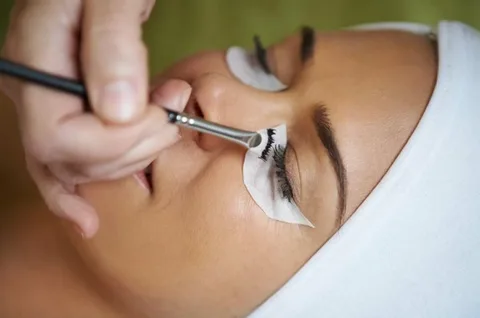
Close-up of a person lying with eyes closed and a white headband on while a hand brushes dark tint onto the eyelashes, with a protective pad under the lower lashes
Tint is painted onto the lashes that are in place on the day of the visit.
For people in Charleston and Mount Pleasant asking how long a lash tint lasts, the American Academy of Ophthalmology puts the color at about three to six weeks.[1] Tinting paints semi-permanent dye onto the lashes[1], and eyelashes shed and are replaced on a growth cycle[2], so the likeliest explanation for the fade, though not one a study has measured, is lash turnover.

This guide walks through the eyelash biology behind that explanation, using the measurements researchers have made of real eyelashes, then covers what the FDA says about lash dyes, why a skin test still matters if you have tinted for years, and who should hold off. If you are weighing a tint at one of our offices, our brow and lash tinting service page explains how a visit runs.

Key takeaways
  • Expect a lash tint to look its best for roughly three to six weeks.[1] Lash turnover is the likeliest reason it fades, by reasoning from growth data rather than a direct measurement.[2]
  • Eyelash growth phases are short and variable. One review puts active growth at four to ten weeks and the full lash life cycle at four to eleven months.[2] A small study measured a cycle of about 90 days.[3]
  • In a PubMed search on October 5, 2026, we did not find a study that measured how long a lash tint lasts or whether aftercare habits extend it.
  • Federal rules allow one color additive, silver nitrate, in professional lash and brow tints, with tight limits.[5] An FDA hair dye page still says no color additives are approved for this use.[6]
  • Lash dyes have caused allergic reactions around the eye, and you can become allergic after years of trouble-free use.[7][8] For hair dye, the FDA advises a skin test before every use.[6]
  • Postpone a tint if you have an eye infection or inflamed skin near the eye.[4]
Section 01 / Why it fades

Why does a lash tint fade at all?

The American Academy of Ophthalmology describes tinting as a procedure in which semi-permanent dye is painted onto the eyebrows or eyelashes.[1] If the color sits on the lashes that were painted, a lash that grows in after the visit would not carry it. That is a reasoned picture, not a measured one, and it is the picture this guide uses. Think of a fence that replaces a few boards every week: the paint stays on the boards you painted, and the new boards arrive bare.

Eyelashes have a life cycle of three phases: anagen (growth), catagen (degradation), and telogen (rest), after which the lash falls out and a new lash begins growing.[2] A review in the Journal of Optometry describes the eyelash anagen phase as lasting four to ten weeks, and the whole life cycle as four to eleven months.[2] Lashes on your upper lid number roughly 90 to 160, with about 75 to 80 on the lower lid.[2]

If the fence picture holds, a tint fades by attrition: tinted lashes shed over time and new lashes grow in uncolored, so the change would show up as a scattering of lighter lashes among darker ones rather than a sudden loss of color. Again, that is our reading of the cycle data, not a measured result.

Section 02 / The lash clock

How long does one eyelash actually stay on your lid?

Researchers have measured eyelash timing directly. The table collects what two peer-reviewed sources report, side by side, so you can see where they agree and where they differ.

Tint window next to measured lash timing Tint window versus measured eyelash timing, in days Tint looks its best about 21 to 42 days (AAO) Active lash growth about 34 days, plus or minus 9 Full lash cycle about 90 days, plus or minus 5 Day 0 Day 30 Day 60 Day 90 Lash timings come from 4 women followed weekly for 9 months; a 2018 review gives far wider ranges.
Sources: American Academy of Ophthalmology (tint duration); Thibaut et al., British Journal of Dermatology, 2010 (lash timing). Your own lashes may cycle faster or slower.
What was measuredWhat the source reportsSource
Active growth phase (anagen)4 to 10 weeksReview, J Optom 2018[2]
Active growth phase (anagen)34 days on average, plus or minus 9Lash study, Br J Dermatol 2010[3]
Full lash life cycle4 to 11 monthsReview, J Optom 2018[2]
Full lash life cycle90 days on average, plus or minus 5Lash study, Br J Dermatol 2010[3]
Daily growth rateAbout 0.12 mm per dayBoth sources[2][3]
Lashes per lid90 to 160 upper, 75 to 80 lowerReview, J Optom 2018[2]
How long tint color lastsAbout 3 to 6 weeksAmerican Academy of Ophthalmology[1]
Before your next tint

Things to mention at your visit

Tap any that apply to you. This is not a diagnosis and it does not rule a tint in or out. It flags what to bring up before color goes near your eyes.

Two things about these numbers deserve a plain reading. First, the 2010 study was small. It followed four women weekly for nine months to time their lash cycles, and all 29 volunteers in the study were Caucasian women aged 26 to 60.[3] It was also run by a cosmetics company's research division.[3] Its 90-day cycle comes from four women and is not a population average. Second, the review's ranges are wide: four to ten weeks of growth, four to eleven months for the full cycle.[2]

At a growth rate of roughly 0.12 mm a day[2][3], a new lash grows about 3.6 mm in 30 days (simple arithmetic). Our reading of that arithmetic, which is an inference rather than a measured result, is that untinted lashes start to show within a few weeks and become obvious within about six. That is consistent with the three-to-six-week range the American Academy of Ophthalmology gives for tint color.[1]

The AAO calls lash tint “semi-permanent.”[1] In a PubMed search on October 5, 2026 (40 records on eyelash tint or dye), we did not find a study that measured how much the dye on a single lash lightens on its own over time. That gap matters when you read aftercare advice, which is the next topic.

Section 03 / Fade factors

What makes a tint fade sooner, and what is just folklore?

Search for lash tint aftercare and you will find long lists: keep lashes dry for a day, skip oil-based removers, avoid chlorine, stay out of the sun, sleep on your back. In the same PubMed search on October 5, 2026, we did not find a study that measured how long a lash tint lasts with and without these habits. So here is how we sort the advice.

Your own lash cycle (the likeliest factor, by reasoning). Measured lash growth phases range widely.[2][3] If the fade follows turnover, a faster cycle would mean an earlier fade, though we did not find a study that tested that for tint.

Rubbing and heavy removal (some support). The Journal of Optometry review notes that long-term mascara use was linked to milphosis, a loss of lashes, possibly from the rubbing involved in taking it off.[2] Losing lashes early would mean losing tinted lashes early, so gentle removal is a reasonable precaution.

Your starting color (reasoning, not measured). On very fair or graying lashes, the contrast between tinted and untinted lashes is larger than on naturally darker lashes, so new pale lashes may be easier to spot. That is reasoning about contrast, not a measured finding.

Water, oils, sun, and chlorine (untested for lash tint). The product used for your tint comes with its own directions, and those are worth following, including any wait before getting lashes wet. Beyond that, we will not promise you an extra week for avoiding the pool. If these habits make a difference, the search above did not find a measurement of how much.

One more practical point: a tint changes lash color. If thin or sparse lashes are the real concern, that is a different conversation, and one worth having with a clinician such as Ashley Harwyn, PA-C rather than at a counter.

What likely sets your tint's lifespan

Probably your own eyelash turnover. Dye is painted onto the lashes present at the visit, and lashes shed and regrow on a cycle that varies widely between people. The AAO puts tint color at about three to six weeks. The link is reasoning from growth data, not a measured result.

What gets oversold

Aftercare rules promising extra weeks of color. A PubMed search on October 5, 2026 found no study measuring whether skipping water, oils, or sun extends a lash tint.

Section 04 / FDA status

What does the FDA actually say about eyelash dyes?

The federal picture has three parts, and they do not line up neatly.

The warning. The FDA states that permanent eyelash and eyebrow tints and dyes have been known to cause serious eye injuries, including blindness.[4] It also has an import alert in effect for lash and brow dyes that contain coal tar colors.[4]

The one permitted ingredient. Since a 2021 rule (86 FR 55498), federal regulation 21 CFR 73.2550 has allowed silver nitrate as a color additive in lash and brow tints, under restrictions.[5] The product must be professional-use only, contain no more than 4 percent silver nitrate by weight, and is not intended for anyone under 16. Application is not intended to exceed one minute, followed by immediate removal, and the product may not be sold directly to consumers.[5] Its label must warn that silver nitrate may permanently stain skin it touches and may irritate the eyes.[5]

The page that disagrees. The FDA's consumer page on hair dyes, current as of September 2025, says plainly that no color additives are approved for dyeing the eyebrows or eyelashes.[6] The 2019 American Academy of Ophthalmology article made the same statement, two years before the silver nitrate rule existed.[1] We cannot reconcile the agency's own pages for you. What we can point to is the regulation text itself, which names one color additive, silver nitrate, under the narrow conditions above.[5]

On box hair color, the FDA is unambiguous. Coal-tar hair dyes are required to carry a caution that they must not be used on lashes or brows because doing so may cause blindness, and the FDA states that eyebrow and eyelash dyeing are not permitted uses of coal-tar hair dyes.[6]

Why should a duration article spend time on regulation? Because the question of how long a tint lasts usually comes right before the question of whether to do it again, and every repeat visit is another exposure to the product. Knowing what is in it, and asking, is part of deciding how often to rebook.

Section 05 / Skin testing

Is a skin test still worth it if you have tinted for years?

Yes, and the reason is how allergies to dyes develop. MedlinePlus, the National Library of Medicine's consumer site, explains that with allergic contact dermatitis a person can tolerate a substance for years or even decades before becoming allergic to it.[8] It lists hair dyes among the common triggers, and notes that the rash of an allergic reaction typically appears 24 to 48 hours after exposure.[8] The American Academy of Ophthalmology makes the same point about lash and brow color specifically: sensitivity can develop with repeated exposure, and formulas can change over time.[1]

Which ingredients cause trouble? The Journal of Optometry review notes that lash tints are made with dyes containing p-phenylenediamine (PPD), a known sensitizer that can provoke allergic reactions and contact dermatitis.[2] A 2023 report on cosmetics and the eye from the Tear Film and Ocular Surface Society (TFOS) adds that lash dyes commonly include black henna and PPD, and links them to severe inflammation of the lids and the surface of the eye, dermatitis around the eye, and eyelid swelling.[7]

The same report lists permanent silver staining of the eye area as one of the most common side effects of lash dyeing, along with allergic reactions.[7] The FDA's hair dye page also singles out PPD as an ingredient implicated more prominently in allergic reactions.[6]

Two practical lessons come out of this. First, a skin test is a screen, not a guarantee. The FDA's own hair dye advice is to test before every use, while also warning that a reaction is still possible after a clean test.[6] Second, MedlinePlus notes that an allergic rash is often delayed, appearing 24 to 48 hours after exposure.[8] Ask how and when your skin test will be done.

What does a reaction look like? MedlinePlus describes contact dermatitis as skin that becomes red, sore, or inflamed, with itching and sometimes blisters that weep.[8] The FDA advises that if you have a bad reaction to eye cosmetics, you first contact your healthcare provider, and it encourages reporting the reaction to the FDA.[4] Seek same-day care for eye pain or any change in vision.

Had a reaction to hair color, or not sure a tint suits your eyes? Call 843-981-0870 before you book. Tell us what happened last time before we start. A past reaction is a reason for real caution, and we do a skin test first.
Section 06 / Who should wait

Who should skip or postpone a lash tint?

A few situations call for waiting or for a different plan.

  • An active eye infection or inflamed skin around the eye. The FDA advises against eye cosmetics in either case and says to wait until the area is healed.[4]
  • A past reaction to hair dye, henna, or a previous tint. Lash tints commonly contain PPD or black henna[2][7], so raise any past reaction before a tint is planned. Tell whoever is tinting you about any reaction, even a mild one years ago.
  • Teenagers under 16. Silver nitrate tints are not intended for anyone under 16, per the federal regulation.[5]
  • Allergic eye conditions or very reactive skin. The TFOS report connects lash dyes with allergic inflammation of the lids and eye surface.[7] If your eyes flare easily, talk it over with a clinician before booking.
  • Recent eye surgery or ongoing eye treatment. Ask your eye doctor before booking.
  • Anyone tempted to tint at home. Silver nitrate tints are not to be distributed or sold directly to consumers, and eyelash dyeing is not a permitted use of coal-tar hair dyes.[5][6] TFOS notes that tint products are not sold only through licensed professionals, which may lead to more complications from improper use.[7]

If you are pregnant or breastfeeding: a PubMed search on October 5, 2026 for lash or brow tint or dye in pregnancy did not turn up a relevant study, so we cannot give you data either way. Raise it at your visit.

Section 07 / Rebooking

How often should you rebook a lash tint?

Rebook when you see the fade, not when a calendar says so. The AAO puts tint color at about three to six weeks, so that is a reasonable window to start looking.[1]

A simple way to judge timing at home:

  • Look in daylight, without mascara. Check the mix of darker and paler lashes near a window.
  • Check upper and lower lashes separately. They are different sets, roughly 90 to 160 on top and 75 to 80 below, so they may not fade at the same pace.[2]
  • Notice what you reach for. If you are back to daily mascara to get the look you want, the tint has done its job and it is time to decide whether to repeat it.
  • Count your visits over a year. At a three-to-six-week rhythm, that can mean many exposures to the same dye. That is a reason to keep up the skin test and to report any new itch, however small.[1][8]

If you are timing a tint before a Charleston wedding or a trip, plan one adjustment. Leave room for a skin test and for a day or two to see how your lids respond before the event, not the morning of.[8]

At Solcara, lash tinting is offered at both of our offices, in Mount Pleasant on Bramson Court and downtown at The Longevity Club on Rutledge Avenue. We do a skin test first, and a tint can be paired with brow waxing at the same visit or added on to one of our facials. If you are already planning eye-area care, our SmoothEye laser treatment addresses fine lines around the eyes, which a tint does not touch. You can book a visit online when you are ready.

Brow and Lash Tinting

How a tint visit runs at our Mount Pleasant and downtown Charleston offices. Read Brow and Lash Tinting.

Facials

Pair a tint with skin care in the same appointment. Read Facials.

SmoothEye

For fine lines around the eyes, which color alone cannot change. Read SmoothEye.

How Long Does Dermal Filler Last?

Another guide to how long an aesthetic result lasts. Read How Long Does Dermal Filler Last?.

Ask Ashley
Ashley Harwyn, PA-C Ashley Harwyn, PA-C PA-C, ABAAHP · Founder, Solcara Health Online

Tap a question to ask

Darker lashes, planned around your eyes

Book a lash tint at our Mount Pleasant office or downtown at The Longevity Club. Mention any past reaction to hair dye so we can plan your skin test.

BOOK A CONSULTATION →

Or call 843-981-0870

About the author
Ashley Harwyn, PA-C, founder of Solcara Health in Charleston, South Carolina.

Ashley Harwyn, PA-C, ABAAHP

Founder, Solcara Health · Diplomate, American Board of Anti-Aging Health Practitioners (ABAAHP)

Ashley has practiced medicine for more than fifteen years. Her path into it began at home, with a family member born with a congenital heart defect and a childhood spent watching how much the quality of a clinician's attention could change the shape of a life. She has since practiced across a range of settings, including medical mission work in Uganda, before founding Solcara to build the kind of practice she kept wishing existed, one that treats patients as whole people and tells them the truth about what the evidence does and does not support.

Full bio →

References

Eyelash growth data from a Journal of Optometry review and a British Journal of Dermatology study; FDA eye cosmetic and hair dye pages; the silver nitrate regulation, 21 CFR 73.2550; the American Academy of Ophthalmology; the 2023 TFOS cosmetics report; and MedlinePlus, each accessed October 5, 2026.

  1. Vimont C. Know the Risks of Eyebrow and Eyelash Enhancement. American Academy of Ophthalmology. 2019. aao.org
  2. Aumond S, Bitton E. The eyelash follicle features and anomalies: A review. Journal of Optometry. 2018;11(4):211-222. pmc.ncbi.nlm.nih.gov
  3. Thibaut S, De Becker E, Caisey L, et al. Human eyelash characterization. British Journal of Dermatology. 2010;162(2):304-310. pubmed.ncbi.nlm.nih.gov
  4. U.S. Food and Drug Administration. Eye Cosmetic Safety. FDA. 2022. fda.gov
  5. Office of the Federal Register. 21 CFR 73.2550, Silver nitrate (86 FR 55498, October 6, 2021). Electronic Code of Federal Regulations. 2021. ecfr.gov
  6. U.S. Food and Drug Administration. Hair Dyes. FDA. 2025. fda.gov
  7. Sullivan DA, da Costa AX, Del Duca E, et al. TFOS Lifestyle: Impact of cosmetics on the ocular surface. The Ocular Surface. 2023;29:77-130. tearfilm.org
  8. National Library of Medicine. Contact dermatitis. MedlinePlus Medical Encyclopedia. 2025. medlineplus.gov

Medical Disclaimer: This page is for educational and informational purposes only and does not constitute medical advice, and reading it does not create a patient-provider relationship. It describes general medical information and categories of care, not a recommendation that any individual start, stop, or change any test, treatment, or medication. Any diagnosis or treatment decision requires evaluation by a qualified, licensed clinician who knows your personal and family history. Consult a qualified healthcare provider before making medical decisions. Information reflects sources available as of October 5, 2026.

Ashley Harwyn, PA-C, ABAAHP, is a Diplomate of the American Board of Anti-Aging Health Practitioners (ABAAHP) through A4M and the founder of Solcara Health. Solcara serves South Carolina from Downtown Charleston (163 Rutledge Ave, Ste 202, The Longevity Club) and Mt. Pleasant (496 Bramson Ct, Ste 120).

Return to blog
