

.webp)

How to Choose a Functional Medicine Doctor in Charleston: What to Vet First
Vet the clinician before the philosophy: the license, the labs-first question, and the cost model, from a Mount Pleasant PA-C.
That is the part the search results hide. Look up “best functional medicine in Mount Pleasant” and you get Yelp and directory listings, not a guide to telling a careful, licensed practice from a supplement counter with a nice logo. This page is that guide: what functional medicine actually is, which credentials mean something, the red flags that should make you pause, what the evidence genuinely supports, and the exact questions to ask before you hand over your health or your credit card.
- Functional medicine is a practice philosophy, not a license. A good one is practiced by a separately licensed clinician (MD, DO, PA-C, or NP); the approach does not replace a real credential.[6]
- Vet the license first. There is no state “functional medicine license,” so the single most important check is an active clinical license you can verify with the South Carolina board.
- Certifications like IFMCP (Institute for Functional Medicine) and A4M or ABAAHP are post-licensure credentials earned on top of a license, not substitutes for one, and they are distinct from American Board of Medical Specialties board certification in a primary specialty.[4][5]
- The clearest red flags: a fixed supplement protocol sold to everyone, no real diagnostic labs, no licensed clinician on staff, and promises that outrun the evidence. The FTC requires health claims to be backed by competent and reliable scientific evidence.[3]
- The best evidence is encouraging but honest: a Cleveland Clinic study found the functional medicine model was linked to better physical quality of life at 6 months, though it was a retrospective study, not proof of superiority.[1]
- Ask three things before you commit: do you start with labs or a product, what does it cost all-in, and will you coordinate with my primary care doctor.
What functional medicine is, and what it is not
Functional medicine is a root-cause approach that looks at how genetics, environment, and lifestyle drive chronic symptoms, rather than only naming and medicating them.[6] That is a useful lens. But it is a way of practicing, not a license or a board specialty, and that single fact should shape how you choose. Anyone can put “functional medicine” on a sign. What they cannot fake is the clinical license underneath it.
So the right mental model is simple: functional medicine is a philosophy layered on top of a medical license, not a replacement for one. A legitimate practice is run by a licensed MD, DO, PA-C, or NP who happens to practice in a functional, root-cause way.[6] When no licensed clinician is attached, you are not looking at medicine with a different lens; you are looking at something else wearing the word.
This is why the vetting order matters. You confirm the license first and evaluate the philosophy second, because a careful philosophy in unlicensed hands is still unlicensed, and the evidence for functional medicine depends heavily on who is applying it.
The credentials that actually mean something
Credentials in this space range from a real medical license to a weekend certificate, and they are easy to confuse on purpose. The table below sorts the common ones by what they actually represent, so a certificate does not get mistaken for a license.
| Credential | What it is | What it is not |
|---|---|---|
| State license (MD, DO, PA-C, NP) | A legal license to practice medicine, verifiable with the SC board | Optional. This is the non-negotiable baseline |
| IFMCP (Institute for Functional Medicine) | A post-licensure certificate: coursework plus a minimum of 1,000 functional-medicine patient encounters and an exam, open only to licensed providers[5] | A license. It is earned on top of one |
| A4M / ABAAHP diplomate | A recognized post-licensure credential in anti-aging and functional health for already-licensed clinicians | An ABMS board certification in a primary specialty[4] |
| ABMS board certification | Certification by one of the 24 American Board of Medical Specialties boards in a recognized specialty[4] | A functional medicine credential. Anti-aging medicine is not an ABMS specialty |
Does it clear all six?
Tick each one a clinic confirmed. Anything unticked is a question to ask before you start.
Read it honestly, including about my own training. I hold the ABAAHP diplomate through A4M, which is a post-licensure credential earned on top of my PA-C license, and it is a different thing from being board certified by an ABMS member board in a primary specialty.[4] Both can sit behind good care. The point is that you should know which is which, because a clinic that waves a certificate to imply a medical license is hoping you will not ask.
The practical takeaway: a licensed clinician with a functional medicine certificate is a real thing. A functional medicine certificate with no license behind it is not.
Looking for root-cause care in Mount Pleasant or downtown Charleston? Start with a licensed clinician who reads your labs, not a protocol sold to everyone. See how we practice it on the functional medicine page, or call 843-981-0870 to talk it through.
The red flags that should make you pause
Some warning signs are reliable, and they are mostly about money and evidence. The clearest is a practice that sells the same fixed supplement stack to nearly everyone who walks in, because a protocol that does not change with the patient is a product line, not a diagnosis. Pair that with no real diagnostic lab work and you have a sales funnel, not a workup.
Watch the claims, too. The Federal Trade Commission is explicit that health claims must be truthful and substantiated before they are made, requiring “tests, analyses, research, or studies that (1) have been conducted and evaluated in an objective manner by experts in the relevant disease, condition, or function to which the representation relates; and (2) are generally accepted in the profession to yield accurate and reliable results.”[3] A clinic promising to cure or reverse conditions, or to detoxify vague toxins, without that kind of evidence is making exactly the claims the FTC warns about.
The last red flag is the revenue model. If the supplements are sold in-house at a markup and the markup is where the money is, the incentive to recommend more of them is built into the business. That does not make every supplement wrong. It makes transparency about cost and conflicts the thing you have to insist on before you start.
What the evidence says functional medicine can do
Here is the honest state of the evidence, because you deserve it before you pay. The strongest study is a Cleveland Clinic analysis published in JAMA Network Open in 2019, which compared patients seen in its Center for Functional Medicine with primary care patients. At 6 months, the functional medicine group showed a larger improvement in physical quality of life on a standard measure (PROMIS), a statistically significant difference.[1] The lead researcher called it “a first-of-its-kind study to evaluate the impact of functional medicine model of care on patients' health-related quality of life.”[1]
Now the caveats that a careful clinic will tell you and a sales pitch will not. It was a retrospective, non-randomized study, so it shows an association, not proof that the model caused the improvement.[1] And by 12 months the difference between the two groups was no longer statistically significant, in part because the primary care patients also improved.[1] In a responder analysis, about 31% of functional medicine patients improved their physical health score meaningfully at 6 months, compared with about 22% of primary care patients.[2]
The fair reading: functional medicine shows real, encouraging signals for chronic quality-of-life problems, especially early, and it is not a proven cure-all. A clinic that oversells it past that evidence has told you something about itself.
The questions to ask before you commit
You do not need to be an expert to vet a practice. You need a short list of questions, and the answers tell you most of what you need. Ask these before the first full visit, and treat vague or defensive answers as data.
- Who is my licensed clinician, and can I verify the license? Confirm an active MD, DO, PA-C, or NP license with the South Carolina board.
- Do we start with labs and history, or with a product? Labs-first and standard diagnostics are a good sign; a protocol handed over before any testing is not.
- What does this cost all-in? Ask whether it is membership or fee-for-service, whether labs are included, and whether supplements are sold at a markup.
- Is your certification a license or a certificate? A straight answer about IFMCP, A4M, or ABMS board certification tells you the clinic is comfortable being precise.[4][5]
- Will you coordinate with my primary care doctor? Functional medicine works best alongside conventional care, not as a replacement for it.
Choosing a functional medicine doctor in Charleston
The Charleston metro has grown thick with functional and root-cause practices, from Mount Pleasant to West Ashley to Daniel Island, and the range in quality is wide. The address matters less than the answers to the questions above: a licensed clinician, labs before products, honest pricing, and coordination with the rest of your care.
At Solcara, functional medicine for Charleston and Mount Pleasant patients is practiced by a licensed PA-C, grounded in lab work and evidence, with FDA-approved options considered before compounded ones and supplements used where they are warranted rather than sold as the whole plan. If you want to understand what the care actually involves before you choose, our guide to functional medicine in Charleston explains what it treats and how a first visit works. The word on the door is not the thing to vet. The clinician behind it is.
Anti-Aging and Functional Medicine at Solcara
Root-cause care from a licensed clinician. Read Anti-Aging and Functional Medicine at Solcara.
Functional Medicine in Charleston: What It Actually Treats
What the care involves and whether it fits you. Read Functional Medicine in Charleston.
About Ashley Harwyn, PA-C
The licensed, A4M-certified clinician behind the care. Read About Ashley Harwyn, PA-C.
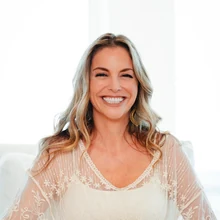 Ashley Harwyn, PA-C
PA-C, ABAAHP · Founder, Solcara Health
Online
Ashley Harwyn, PA-C
PA-C, ABAAHP · Founder, Solcara Health
Online
Tap a question to ask
Medical Disclaimer: This article is for educational and informational purposes only and does not constitute medical advice. It describes a regulatory labeling change and general treatment categories; it is not a recommendation that any individual start, stop, or change a medication. Hormone therapy of any kind, including local vaginal estrogen, requires evaluation by a qualified, licensed clinician who knows your personal and family history. Consult a qualified healthcare provider before making medical decisions. Information reflects sources available as of October 1, 2026.
Ashley Harwyn, PA-C, ABAAHP, is a Diplomate of the American Board of Anti-Aging Health Practitioners (ABAAHP) through A4M and the founder of Solcara Health. Solcara serves South Carolina from Downtown Charleston (163 Rutledge Ave, Ste 202, The Longevity Club) and Mt. Pleasant (496 Bramson Ct, Ste 120).

Quick Links