Longevity Medicine in Downtown Charleston: Inside The Longevity Club
Ashley Harwyn, PA-C | A4M Board Certified | SC PA License | July 11, 2026 | 12 min read
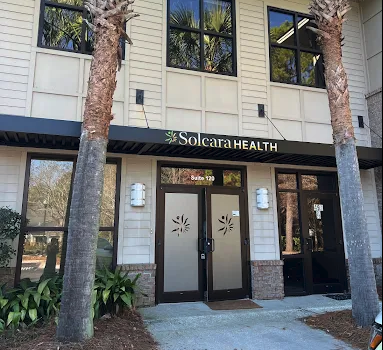
The Longevity Club, 163 Rutledge Avenue. Solcara's downtown Charleston home for longevity medicine.
The average American now dies after roughly a decade of poor health. Not a few bad months at the end, but 12.4 years of living with disease and disability, the widest gap between healthy years and total years of any country on earth. If you are a woman, that gap is wider still. Longevity medicine exists to close it. This guide explains what the field actually is, what the peer-reviewed evidence supports and what it does not, and what the practice of it looks like inside The Longevity Club on Rutledge Avenue in downtown Charleston.
DIRECT ANSWER
Longevity medicine is a clinical field built on geroscience, the biology of aging, that targets the mechanisms driving age-related disease in order to extend healthspan, the years lived free of significant disease and disability. It differs from "anti-aging" marketing in that it uses validated biomarkers and peer-reviewed interventions rather than unproven supplements. In the United States the healthspan-lifespan gap is 12.4 years, the largest in the world, and it is 2.4 years wider for women than men.
Section 01 / The Definition
What is longevity medicine?
Longevity medicine is the clinical application of geroscience, the research field that studies how the biology of aging drives chronic disease. Its founding premise, articulated by the National Institute on Aging's trans-NIH Geroscience Interest Group, is that aging is the single largest risk factor for nearly every chronic disease of later life. The geroscience hypothesis holds that by targeting the underlying hallmarks of aging, it may be possible to prevent or delay several age-related diseases at once, rather than treating each one separately after it appears[1].
The goal is a specific and measurable one. In the NIA's own framing, the objective is to increase healthspan, defined as the portion of life spent free of significant disease and disability[2]. This is not the same as simply living longer. It is about the quality and function of the years you have. The scientific foundation underneath it is substantial: the field crystallized around the landmark 2013 Cell paper "The Hallmarks of Aging," which catalogued the molecular and cellular mechanisms that drive biological aging and gave clinicians a set of targets to work with[3].
In practice, that translates into a clinical posture that is fundamentally different from reactive care: measure the biological drivers of decline early, intervene while they are still modifiable, and measure again to confirm the intervention worked.
Section 02 / The 12.4-Year Problem
Healthspan vs lifespan: what is the difference?
Lifespan is how long you live. Healthspan is how long you live well. The distance between the two is where modern medicine has quietly failed, and quantifying that distance is what makes the case for longevity medicine so hard to argue with.
In December 2024, researchers publishing in JAMA Network Open measured this gap across all 183 World Health Organization member states. Globally, the healthspan-lifespan gap has widened to 9.6 years, up from 8.5 years in 2000[4]. Medicine has become very good at keeping people alive and considerably less good at keeping them well.
The United States performed worst of all 183 nations. The American healthspan-lifespan gap is 12.4 years, the largest recorded anywhere in the world, driven by the rising burden of noncommunicable disease[4]. More than a decade, on average, spent in a state of disease or disability at the end of life. That is the number longevity medicine is trying to shrink.
Garmany A, Terzic A. JAMA Network Open, December 2024. Analysis of 183 WHO member states.
Section 03 / Why Women Are Hit Hardest
Why do women face a wider healthspan gap than men?
This is the finding that should change how women in midlife think about their health, and it is the one almost nobody talks about.
The same JAMA Network Open analysis found that women globally experience a healthspan-lifespan gap 2.4 years wider than men's[4]. Women live longer, yes. But they spend more of those additional years in poor health. Greater longevity, in other words, has not translated into equivalent health quality for women, and the difference is not trivial.
There is a reason this matters enormously in a practice like ours. The midlife hormonal transition reshapes cardiovascular risk, metabolic function, bone density, and cognition all at once, and it happens in a window where women are routinely told their labs look fine. Closing a woman's healthspan gap means acting during that window rather than after it, which is precisely why our cardiometabolic longevity workup for women and our perimenopause care are built as longevity interventions rather than symptom management.
Section 04 / The Critical Distinction
Longevity medicine vs anti-aging: what is the difference?
These two terms get used interchangeably, and they should not be. Understanding the difference is the single most useful thing you can take from this article, because it is how you tell a real practice from a storefront.
"Anti-Aging" (as marketed)
× Loosely regulated umbrella term
× Often sells proprietary supplements
× Promises specific "years reversed"
× Leads with the flashiest test
× Aesthetic outcomes as the goal
Longevity Medicine (clinical)
✓ Grounded in geroscience research
✓ Validated biomarkers (ApoB, insulin, hs-CRP)
✓ Honest about evidence limits
✓ Leads with what changes decisions
✓Healthspan as the measurable goal
The honest version of this field is humble. It tells you which parts of your plan rest on solid evidence and which are promising but unproven. When a practice promises to reverse your biological age by a specific number of years, or builds your plan around a shelf of supplements it happens to sell, that is marketing wearing a lab coat.
Section 05 / The Honest Answer
Is longevity medicine legitimate, or is it a scam?
Both versions exist, and you deserve to know how to tell them apart. So let me draw the line plainly, including where it runs through my own field.
What is genuinely well established. The geroscience hypothesis is a serious, federally funded research program. The National Institute on Aging convenes summits on it, Congress has directed NIH to prioritize it, and the interventions with the strongest human evidence are, frankly, unglamorous: resistance training, sleep, an expanded biomarker panel to guide prevention, and treating metabolic dysfunction early[1]. Large prospective cohort research published in Circulation found that adopting multiple healthy lifestyle factors in midlife is associated with substantially more years lived free of major chronic disease[5]. The boring things work, and they work well.
What is promising but still emerging. Epigenetic clocks and biological-age testing are scientifically interesting and improving, but the science is still maturing and they should not be the centerpiece of a serious plan. Pharmacological gerotherapeutics, drugs that target aging mechanisms directly, are under active investigation at the NIA, and that research is real, but it remains investigational rather than settled clinical practice[2].
What is marketing. Proprietary supplement stacks sold as the core of a longevity plan. Promises of a specific number of years reversed. Any practice that will not tell you plainly which parts of its protocol are evidence-based and which are speculative.
If a longevity practice cannot tell you what it does not know, it is not practicing medicine.
Section 06 / The Testing
What tests does longevity medicine involve?
The governing rule is not "more tests." It is: measure the things that change what you do next. A panel that generates a hundred numbers and zero decisions is theater.
The backbone of a serious workup is a set of markers that predict real risk decades early. ApoB gives a direct count of the particles that drive atherosclerosis, and it outperforms standard LDL cholesterol as a predictor. Fasting insulin reveals metabolic dysfunction years before glucose rises into a diagnostic range. hs-CRP captures the low-grade inflammation that quietly accelerates most aging pathways. Add Lp(a), which is largely inherited and should be measured once in every adult, alongside a full thyroid and hormone panel, body composition, and a genuine assessment of strength and cardiorespiratory fitness, which are among the strongest predictors of how the next thirty years will go.
Where the picture warrants a closer look, imaging such as coronary calcium scoring or carotid intima-media thickness can add real information. We identify when that step is appropriate and coordinate it through a longevity-aware cardiologist, rather than performing it in-house. You can read the detail of how we build these panels in our guides to advanced testing and the functional thyroid panel.
Interactive · 60 seconds
The Healthspan Gap Check
Six questions on the factors that most influence how many of your years are healthy ones. Nothing is stored or sent anywhere.
Question 1 of 60%
0
out of 100
This is an educational reflection tool, not a medical assessment. The only way to know your actual risk picture is to measure it.
Educational only. Not a diagnosis, screening instrument, or substitute for clinical evaluation.
Section 07 / Inside The Longevity Club
Where can I find longevity medicine in downtown Charleston?
Our downtown practice sits inside The Longevity Club at 163 Rutledge Avenue, Suite 202, in the 29403, on the upper peninsula between the medical district and Hampton Park. It is a deliberate location. Charleston's peninsula concentrates exactly the population that this medicine serves and the system underserves: physicians and nurses from the nearby hospital corridor, attorneys and founders working long hours downtown, and women in midlife who have been told for years that their labs look fine.
Practically, it means you are not fighting the bridge. Patients come from Cannonborough and Elliotborough on foot, from Wagener Terrace and the Crosstown in minutes, from Harleston Village and South of Broad without crossing water. Our Mount Pleasant office on Bramson Court serves the Old Village, Daniel Island, and the Isle of Palms side. The two locations run the same medicine.
How the care model actually works
The structure follows the measure-first logic described above, and it is designed to remove the two things that make conventional prevention fail: not enough data, and not enough time.
01
Comprehensive lab insights. A complete panel establishes a real baseline, not an abbreviated one.
02
A full hour, in person. We walk through every result together. The average US primary care visit runs about 18 minutes.
03
A personalized care plan. Built on your biology and your goals, not population averages.
04
Measure again. Regular follow-ups confirm whether the intervention actually moved the number.
05
Care that listens. Concierge access is built into the model rather than sold as an upgrade.
Twelve years is the average. It does not have to be yours.
Book a longevity consultation at The Longevity Club downtown, or our Mount Pleasant office. It starts by measuring where you actually stand.
Who is longevity medicine for, and who is it not for?
It fits the person who wants to know their real risk while there is still time to change it. That is especially true if you carry a family history of cardiovascular disease, dementia, cancer, or metabolic disease, or if you are moving through the midlife hormonal transition and want it treated as the healthspan event it actually is.
It is a poor fit for three people, and I would rather say so plainly. It is not for someone who wants a supplement protocol instead of a lifestyle change; the evidence does not support that trade, and I will not sell it. It is not for someone seeking a guaranteed number of added years, because no honest clinician can promise that. And it is not a substitute for urgent or acute care. If you want a partner who will measure carefully, tell you the truth about what the numbers mean, and hold you to a plan, that is exactly what this is.
Section 09 / The Value Question
Is longevity medicine worth it?
Here is the honest calculus. What you are buying is not a supplement or a scan. You are buying the two things conventional prevention cannot give you: enough data to see a problem while it is still reversible, and enough time with a clinician to actually understand it. Whether that is worth it depends entirely on whether you would act on the information.
If you would not change anything regardless of what your ApoB says, save your money. If you would, then measuring it in your forties rather than discovering it in your sixties is among the highest-leverage decisions available to you. The 12.4-year American healthspan gap is not a fixed sentence. It is a population average built from individual trajectories, and trajectories can be changed while they are still trajectories.
Founder, Solcara Health · Board Certified in Anti-Aging and Functional Medicine (A4M)
Ashley has practiced medicine for more than fifteen years. Her path into it began at home: a family member born with a congenital heart defect, and a childhood spent watching how much the quality of a clinician's attention could change the shape of a life. She has since practiced across a range of settings, including medical mission work in Uganda, before founding Solcara to build the kind of practice she kept wishing existed, one that treats wellness rather than waiting for illness.
She holds board certification through the American Academy of Anti-Aging Medicine and leads Solcara's longevity practice from The Longevity Club in downtown Charleston and the Mount Pleasant office.
A4M Board Certified15+ years in practiceLegitScript Certified PracticeFull bio →
References
Primary literature and federal research sources.
National Institute on Aging. Trans-NIH Geroscience Interest Group (GSIG): the geroscience hypothesis and healthspan. nia.nih.gov/gsig
Espinoza SE, Khosla S, Baur JA, de Cabo R, Musi N. Drugs Targeting Mechanisms of Aging to Delay Age-Related Disease and Promote Healthspan: Proceedings of a National Institute on Aging Workshop. J Gerontol A Biol Sci Med Sci. 2023;78(Suppl 1):53-60. doi:10.1093/gerona/glad034
López-Otín C, Blasco MA, Partridge L, Serrano M, Kroemer G. The Hallmarks of Aging. Cell. 2013;153(6):1194-1217. PMID: 23746838
Garmany A, Terzic A. Global Healthspan-Lifespan Gaps Among 183 World Health Organization Member States. JAMA Netw Open. 2024;7(12):e2450241. doi:10.1001/jamanetworkopen.2024.50241
Li Y, Pan A, Wang DD, et al. Impact of Healthy Lifestyle Factors on Life Expectancies in the US Population. Circulation. 2018;138(4):345-355. PMID: 29712712
Attia P. Outlive: The Science and Art of Longevity. Harmony; 2023. (Medicine 3.0 framework, attributed.)
The Bottom Line
Twelve years is the average. It is not a verdict.
Americans spend more years in poor health at the end of life than any other population on earth, and women spend more of them than men. That is the problem longevity medicine was built to solve, and the science underneath it, from the NIA's geroscience program to the hallmarks of aging literature, is real, federally funded, and serious.
The version worth your trust is the one that stays honest about its own limits: that leads with strength training and a biomarker panel rather than a supplement shelf, that tells you when a test is still experimental, and that measures again to prove the plan worked. That is the medicine we practice on Rutledge Avenue. If you want to know where you actually stand, the first step is simply to measure it.
Measure what matters, while it still matters
Book a longevity consultation at The Longevity Club, 163 Rutledge Avenue in downtown Charleston, or our Mount Pleasant office on Bramson Court.
Medical Disclaimer: This article is for educational and informational purposes only and does not constitute medical advice. The interactive tool included above is an educational reflection aid, not a diagnostic instrument, screening test, or substitute for clinical evaluation. Biomarkers discussed inform clinical assessment; they are not standalone diagnoses, and their interpretation is an individual clinical decision. Some tools discussed, including biological-age testing and pharmacological gerotherapeutics, remain investigational. No approach guarantees a specific lifespan or health outcome. Consult a qualified healthcare provider before making medical decisions. Information reflects sources available as of July 20, 2026.
Ashley Harwyn, PA-C, is Board Certified in Anti-Aging and Functional Medicine (A4M) and the founder of Solcara Health, a LegitScript-certified practice. Solcara serves South Carolina from Mt. Pleasant (496 Bramson Ct, Ste 120) and Downtown Charleston (163 Rutledge Ave, Ste 202, The Longevity Club).


.webp)

 Ashley Harwyn, PA-C
A4M Board Certified · Founder, Solcara Health
Online
Ashley Harwyn, PA-C
A4M Board Certified · Founder, Solcara Health
Online