What to Expect from Your First Laser Treatment in Mount Pleasant
Ashley Harwyn, PA-C, ABAAHP | Published August 4, 2025 | Last updated October 6, 2026 | 19 min read
A first laser visit is mostly planning and aftercare. Here is the whole timeline, from four weeks out to the day your new skin stops looking pink.
The laser is the short part of the visit; prep and aftercare fill the weeks before and after.
Your first laser treatment in Mount Pleasant really starts about a month before you sit in the chair: no tan, a pause on retinoid and glycolic products, a plan for cold sores, and an honest consult. After that comes a short visit with numbing and eye protection, a few days of redness and swelling that feel like a sunburn, and several weeks of careful sun protection while new skin settles in.[1][5] How long each stage lasts depends on how deep the laser goes[3], and our laser skin resurfacing page compares recovery by depth.
This guide walks the whole timeline in order: the weeks before, the day itself, the first 72 hours, weeks one through four, and the signs that mean you should call rather than wait. It is written for someone booking a first visit at our Mount Pleasant office or at The Longevity Club in downtown Charleston, but the prep and aftercare principles come from dermatology and plastic surgery societies and apply wherever you are treated. If you are still deciding which laser fits your concern, our guide to laser skin options in Mount Pleasant covers that question; this page assumes the choice is made and you want to know what happens next.
Key takeaways
Prep starts weeks ahead. Dermatologists advise stopping retinoid or glycolic acid products for 2 to 4 weeks and quitting smoking for at least 2 weeks before laser treatment.[1]
A tan or sunburn on treatment day means the laser cannot be used safely, because it could burn or discolor your skin.[1]
If you get cold sores, say so at the consult. Medicine taken before and after treatment can help prevent a flare.[1][5]
Most people feel something like a mild sunburn afterward, with redness, swelling, and some itching or stinging for a few days. Deeper treatments can ooze, crust, and then peel around days 5 to 7.[5]
New skin often stays pink for weeks. Plastic surgeons note it gradually lightens over two to three months and can take up to a year to fade fully.[5]
More redness, pain, or swelling over time, thick or foul drainage, or a fever of 100.5 degrees F or higher are reasons to call, not to wait.[10]
Section 01 / Four weeks out
What should you do in the four weeks before your first laser appointment?
Most of the prep is about two goals: calm, untanned skin on the day, and no surprises from medicines or old infections once the skin is healing. The American Academy of Dermatology (AAD) is blunt about why the consult has to come first. In its advice on laser scar treatment, it says that if someone promises treatment before a medical consultation, walk away.[1]
Four weeks out. This is when to stop products that make skin more reactive. In its guidance on laser treatment for scars, the AAD advises stopping skin care products that contain a retinoid or glycolic acid for 2 to 4 weeks beforehand.[1] Specialists sometimes go the other way for full resurfacing. Plastic surgeons may start a prescribed skin-prep routine six weeks or more ahead, customized to your skin type, and the American Society for Dermatologic Surgery (ASDS) says some patients are asked to apply a topical retinoid for about four weeks before the procedure.[4][3]
These describe different situations: the AAD advice is about stopping products, while the ASPS and ASDS describe a regimen a clinician prescribes. Follow the plan you are given, and ask if the two seem to conflict.
Two weeks out. If you smoke, the AAD recommends quitting for at least 2 weeks before treatment, and stopping vitamin E, aspirin, and other medications and supplements that can delay healing.[1] Bring the full list, and ask your clinician before pausing any prescribed medicine. Some medicines make skin more sensitive to laser light, which is why the full list matters, supplements included.[2]
The whole month. Stay out of tanning beds and plan around strong sun. The AAD says you cannot be treated with a tan or sunburn, because the laser could cause a serious burn or discolor your skin.[1] Once a laser treatment has been chosen, the AAD advises shade, sun-protective clothing, and broad-spectrum, water-resistant sunscreen with SPF 30 or higher on all skin not covered by clothing.[2] If you do get a tan or sunburn before your appointment, tell the office before the visit.
Tell us at the consult
A few details change the plan, so raise them early rather than on the day:
Cold sores. If you get them, you may be given an antiviral to take before and after treatment. The ASDS says patients with a history of herpes infections will be prescribed one.[3]
Health conditions. The AAD lists diabetes and other medical conditions among the things to mention, along with smoking and every medication or supplement.[1]
Pregnancy, active acne, or a skin infection. Raise each one before treatment is planned. The ASDS notes active acne usually rules out laser resurfacing for now, and the AAD lists pregnancy and skin infection as reasons a tightening procedure is not right.[3][6]
Your expectations. The AAD asks patients to be honest about what result they expect.[1] A laser can make a scar less noticeable, but it cannot get rid of it.[1]
At Solcara, every laser plan starts with that consult, and care is led by Ashley Harwyn, PA-C. You can read about her training on the about Ashley page.
Not sure your calendar leaves room for prep? Call 843-981-0870 before you book. Ask what to pause and when, based on your dates, your skin, and the products you use now.
Section 02 / Treatment day
What happens on the day of your laser treatment?
Tell the team about anything that changed since your consult, such as a new medicine, a recent sunburn, or a cold sore starting. The treatment itself typically involves cleansing, numbing, and then the laser.[4]
Numbing and comfort. Most Solcara laser procedures begin with a prescription-strength numbing cream. For resurfacing, the skin is either numbed with a cream or cooled with chilled air, and the depth of the treatment decides which. Larger or deeper procedures elsewhere may add more. The ASDS notes that medication is often given to help patients relax and reduce pain, with topical anesthetics for small areas and a nerve block or conscious sedation for larger ones.[3] Our laser services page notes that most people feel heat or a snapping sensation.
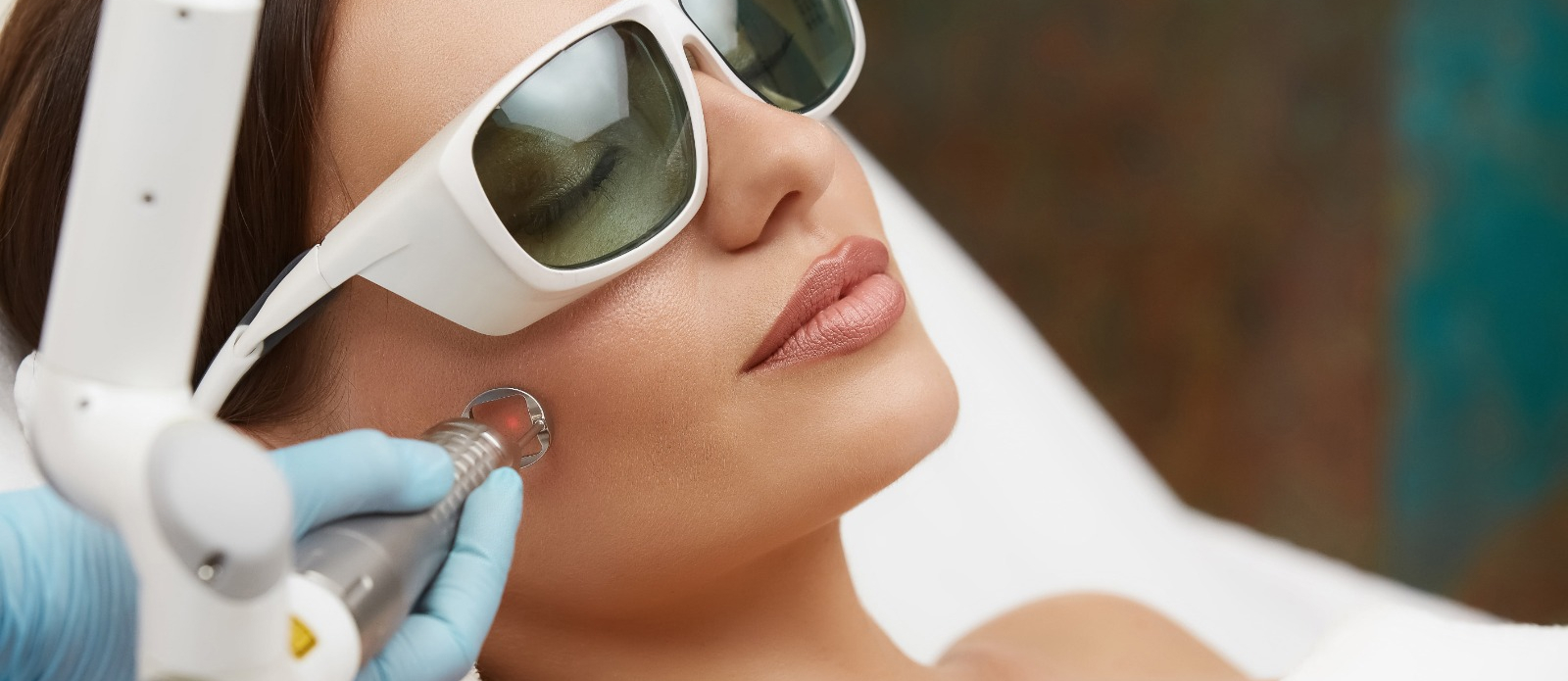
Eye protection and cleansing. The ASPS describes the face being cleaned thoroughly before the laser, and notes you may be given eye protection.[4] If you are unsure when it is safe to remove it, ask.
How long it takes. On Solcara's own pages, a resurfacing session usually runs 15 to 30 minutes, and laser treatments overall run about 20 to 60 minutes depending on the treatment and the area. For comparison, the American Society of Plastic Surgeons (ASPS) says cosmetic laser resurfacing typically takes between 30 minutes and 2 hours as an outpatient procedure.[4]
Before you leave. After resurfacing at Solcara, you go home with written aftercare and ALASTIN skincare recovery products for the healing skin. After full ablative resurfacing, specialists may apply a dressing to protect the treated tissue, and further dressing changes or topical treatments may be needed.[4] Read your instructions before you leave the parking lot, and ask about anything that is not clear while you are still in the room.
The day-of experience also depends on how deep the laser goes. A gentle, non-ablative session that heats deeper skin while the surface stays intact usually leaves temporary redness and swelling and little else.[6] A full resurfacing session that removes layers of skin is a bigger day, with real downtime to follow.[3][6] Our laser services page explains how each Solcara treatment sits on that range.
Section 03 / Recovery arc
How does recovery unfold, from the first 72 hours to week four?
Here is the usual recovery arc as the ASPS and ASDS describe it, stage by stage for a first laser treatment, with the deeper resurfacing path noted where it differs. Your own timeline may be shorter if the treatment was gentle, and longer if it was deep.
Sources: American Society of Plastic Surgeons, Laser skin resurfacing recovery; American Society for Dermatologic Surgery, Laser resurfacing. Gentle non-ablative treatments usually heal much faster than these deeper timelines.
When
What is typical
What helps
4 to 2 weeks before
Retinoid and glycolic products paused; smoking stopped; no tanning[1]
Cleansing, numbing, eye protection, then the laser[4]
Written aftercare to read before you leave
Days 1 to 3
Feels like a mild sunburn: redness, swelling, itching or stinging[5]
Ice pack and an extra pillow at night; gentle cleansing as directed[5]
Days 3 to 10
Deeper treatments heal over 3 to 10 days, often drying and peeling around days 5 to 7[3][5]
Daily soaks, ointment, and dressing care if prescribed; no picking at crusts[3][5]
Weeks 2 to 4
New skin is pink and sensitive; tightening and fewer wrinkles can show within about 2 weeks of healing after full resurfacing[5][6]
Daily sunscreen, moisturizer if directed, oil-free makeup once healed[5]
Week 6 and beyond
Pinkness keeps fading over 2 to 3 months, sometimes up to a year[5]
Retinoid or glycolic products restart around six weeks, if your clinician agrees[5]
First laser prep check
What to mention before your first session
Tap each statement that is true for you. This does not decide whether a laser is right for you. It flags what Ashley needs to hear so your prep and timing can be planned around it.
The first 72 hours. The ASPS describes most laser-treated skin as feeling like a mild sunburn, with redness, swelling, and itching or stinging for a few days.[5] Its tips are practical: sleep with your head raised on an extra pillow, use an ice pack during the first day or two, and stop smoking, because tobacco smoke will complicate healing.[5] After deeper work, the treated skin may look like a severe sunburn: raw, oozing, sometimes blistered, with a yellow liquid that dries into a crust.[5] Leave the crust alone. Picking or scratching it can cause scarring.[5]
Daily care after deeper work. After full resurfacing, the ASDS says patients soak the area, apply ointment, and re-dress it daily, and that healing takes 3 to 10 days depending on the depth and the laser used.[3] The ASPS describes cleaning treated skin two to five times a day with saline or a diluted vinegar solution, as your surgeon directs.[5] Your written instructions take priority over any general guide, including this one.
Weeks one through four. Around five days to a week after resurfacing, the skin typically dries and peels; once it has peeled, the new skin underneath is pink.[5] That pink is expected. It gradually lightens over two to three months, and it can take up to a year to fade completely. Redness tends to last longer in people with blond or red hair.[5] Once the treated areas have healed, oil-free makeup can help, and a green-based product neutralizes red tones.[5] Moisturize generously if your clinician tells you to, and hold off on retinoid or glycolic acid products until around six weeks, or whenever your clinician clears them.[5]
Section 04 / Results clock
How soon will you see results, and how many sessions will it take?
Results arrive on two very different clocks, and your first appointment sets which one you are on. After full laser resurfacing, the AAD says you will need to stay home for 5 to 7 days and, once healed, can see tightening and fewer wrinkles within about 2 weeks.[6] Lasers that heat deeper skin without wounding the surface work the other way. For tightening, the AAD says you may need 3 to 5 treatments, with results that gradually appear 2 to 6 months after the last one, and little or no downtime.[6]
That gap matters for planning. If you have a wedding, a reunion, or a big work event on the calendar, the deep option gives faster visible change but costs a week of social life, while the gentle option fits around your schedule but takes months to show. Neither is wrong. They are different trades, and the right one depends on what you can give up and when.
Scars follow their own slower timetable. The AAD notes it can take months to see results from laser scar treatment, with little improvement at first, and that a series of treatments is often needed, especially with non-ablative lasers.[1] A laser can make a scar less noticeable; it replaces one scar with a less-visible one rather than removing it.[1] If acne scars are your reason for booking, our acne and acne scars page explains how scar type shapes the plan.
If firmness is the goal and you want to know how long it holds once you get there, our post on how long laser skin tightening lasts covers durability and maintenance.
Section 05 / Warning signs
When should you call instead of waiting it out?
The warning signs MedlinePlus lists for a healing wound are about change for the worse: more redness, pain, swelling, or bleeding, or drainage that changes.[10] The expected effects described above are the comparison point.
Complications after laser resurfacing are well described. The ASPS lists acne flares, bacterial infection, cold sore reactivation, darkening or (more rarely) lightening of skin tone, milia (small white bumps), prolonged redness, swelling, and scarring, which it calls rare but possible.[5] The ASDS adds burning, itching, and bumps from blocked sweat glands.[3] A review of fractional resurfacing found complications are far less common than with traditional fully ablative lasers, but can still be serious and long-lasting, and are more likely in sensitive areas, in darker skin, and in people with medical risk factors.[8] The same review notes that many of them can potentially be prevented.[8]
Contact the office if you notice:
Redness, pain, swelling, or bleeding that is increasing rather than settling. MedlinePlus lists this among signs to contact your provider about with any open wound.[10]
Drainage that increases or turns thick, tan, green, or yellow, or smells bad, which can signal pus.[10] (A thin yellow crust that forms in the first days after deep resurfacing is part of normal healing, so the change over time is what matters.)[5]
A temperature of 100.5 degrees F (38 C) or higher.[10]
A cold sore, or new sores or blisters around the mouth, especially if you are prone to cold sores. Laser resurfacing around the mouth can reactivate them, and antivirals are used to prevent it.[5]
Dark patches appearing weeks later. Darkening of treated skin is a known complication, and there are treatments for it, so it is worth reporting early.[5]
Call 911 for trouble breathing.
Healing on track
Warmth, redness, swelling, and some itching or stinging for a few days. After deeper work, oozing that dries into a crust, peeling around days 5 to 7, then pink new skin that fades over months.
Reasons to call the office
Redness, pain, or swelling that keeps increasing; drainage that turns thick, tan, green, or yellow, or smells bad; a fever of 100.5 degrees F or higher; new sores or blisters around the mouth; or dark patches that show up weeks later.
Section 06 / Sun and skin tone
How do you plan a first laser around sun exposure and your skin tone?
Sun matters on both sides of the appointment. Before treatment, a tan means you cannot be treated.[1] After treatment, sun on healing skin can cause another scar, so protection has to continue until the skin heals.[1] At Solcara we ask resurfacing patients to avoid direct sun for at least a week afterward, so plan a first resurfacing session for weeks without beach days or boating in Charleston.
Once you are healed, sunscreen becomes a daily habit rather than a beach habit. The AAD recommends a broad-spectrum, water-resistant sunscreen with SPF 30 or higher, reapplied about every two hours outdoors and after swimming or sweating.[9] It also notes that visible light can darken skin, particularly in people with darker skin tones, and that a tinted broad-spectrum sunscreen with SPF 30 or higher helps protect against it.[9] The ASPS puts it more bluntly for resurfaced skin: sunscreen every day, no exceptions.[5]
Skin tone shapes the plan, too. The AAD says lasers can be used on all skin types, but darker skin is more prone to burns and dark marks after laser treatment, and recommends working with a clinician experienced in treating darker skin.[2] A 2022 meta-analysis of 43 studies and 1,654 people with Fitzpatrick skin types IV to VI looked at non-ablative lasers and similar devices. The most common side effect was post-inflammatory hyperpigmentation (dark marks) at 8.1%, followed by prolonged redness at 0.6%.[7]
Dark marks were more likely with darker skin type, denser laser settings, and more total energy delivered.[7] The ASDS adds that people with very dark skin usually are not good candidates for full laser resurfacing.[3]
At Solcara, darker skin usually means milder settings, longer gaps between visits, and in some cases a test spot before the full treatment. If dark spots or melasma are what brought you in, read our guide to laser treatment for hyperpigmentation before booking.
Results also depend on who holds the laser. The AAD notes that laser results depend largely on the skill of the person performing the procedure, and that the limited training and supervision in non-medical settings such as spas may put your health at risk.[2] Ask who will treat you, what training they have, and what happens if something goes wrong after hours.
Skin Resurfacing
Ablative and non-ablative options, recovery by depth, and how we plan for darker skin. Read Skin Resurfacing.
Laser Services
Every Solcara laser treatment sorted by how much downtime it needs. Read Laser Services.
Book a consult with Ashley at our Mount Pleasant office or The Longevity Club downtown, and bring a list of every product, medicine, and supplement you use.
Founder, Solcara Health · Diplomate, American Board of Anti-Aging Health Practitioners (ABAAHP)
Ashley has practiced medicine for more than fifteen years. Her path into it began at home, with a family member born with a congenital heart defect and a childhood spent watching how much the quality of a clinician's attention could change the shape of a life. She has since practiced across a range of settings, including medical mission work in Uganda, before founding Solcara to build the kind of practice she kept wishing existed, one that treats patients as whole people and tells them the truth about what the evidence does and does not support.
Patient guidance from the American Academy of Dermatology, the American Society for Dermatologic Surgery, the American Society of Plastic Surgeons, and MedlinePlus, plus a 2022 meta-analysis (Aesthetic Surgery Journal) and a 2010 review (Dermatologic Surgery) of laser side effects, each accessed October 5, 2026.
American Academy of Dermatology. 10 things to know before having laser treatment for your scar. AAD. aad.org
American Academy of Dermatology. Skin conditions that lasers can treat. AAD. 2021. aad.org
American Society for Dermatologic Surgery. Laser resurfacing. ASDS. asds.net
American Society of Plastic Surgeons. Laser skin resurfacing: procedure steps. ASPS. plasticsurgery.org
American Society of Plastic Surgeons. Laser skin resurfacing: recovery. ASPS. plasticsurgery.org
American Academy of Dermatology. Many ways to firm sagging skin. AAD. aad.org
Hu S, Atmakuri M, Rosenberg J. Adverse Events of Nonablative Lasers and Energy-Based Therapies in Subjects with Fitzpatrick Skin Phototypes IV to VI: A Systematic Review and Meta-Analysis. Aesthetic Surgery Journal. 2022. pubmed.ncbi.nlm.nih.gov
American Academy of Dermatology. Sunscreen FAQs. AAD. 2025. aad.org
MedlinePlus, U.S. National Library of Medicine. Surgical wound care - open. MedlinePlus Medical Encyclopedia. medlineplus.gov
Medical Disclaimer: This page is for educational and informational purposes only and does not constitute medical advice, and reading it does not create a patient-provider relationship. It describes general medical information and categories of care, not a recommendation that any individual start, stop, or change any test, treatment, or medication. Any diagnosis or treatment decision requires evaluation by a qualified, licensed clinician who knows your personal and family history. Consult a qualified healthcare provider before making medical decisions. Information reflects sources available as of October 5, 2026.
Ashley Harwyn, PA-C, ABAAHP, is a Diplomate of the American Board of Anti-Aging Health Practitioners (ABAAHP) through A4M and the founder of Solcara Health. Solcara serves South Carolina from Downtown Charleston (163 Rutledge Ave, Ste 202, The Longevity Club) and Mt. Pleasant (496 Bramson Ct, Ste 120).

.webp)
 Ashley Harwyn, PA-C
PA-C, ABAAHP · Founder, Solcara Health
Online
Ashley Harwyn, PA-C
PA-C, ABAAHP · Founder, Solcara Health
Online