From Soul to Science: Completing My A4M Fellowship in Anti-Aging and Functional Medicine
Ashley Harwyn, PA-C, ABAAHP | Published July 14, 2025 | Last updated October 6, 2026 | 17 min read
A personal milestone in Ashley Harwyn's own words, with a plain account of what the A4M fellowship and ABAAHP certification involve and what the evidence on functional medicine shows.
Years of coursework, one exam, and a published list of requirements.
Ashley Harwyn, PA-C, of Solcara Health in Mount Pleasant and downtown Charleston, has completed the Fellowship in Anti-Aging, Metabolic, and Functional Medicine through A4M. A4M describes the fellowship as modular clinical education rooted in a systems-biology approach, and it sits alongside her diplomate certification from the American Board of Anti-Aging Health Practitioners (ABAAHP), which requires a written exam plus a set of practice requirements.[1][3] Solcara's anti-aging and functional medicine care page explains how that care model works.
There are moments in life that feel like a sunrise after a long night. This is one of them. After years of studying, growing, pushing, and yes, birthing two beautiful little humans in between, I have officially completed my Fellowship in Anti-Aging, Metabolic, and Functional Medicine through A4M (the American Academy of Anti-Aging Medicine). It has been a winding journey with textbooks in one hand and diapers in the other. Now, I get to pour everything I have learned back into Solcara Health, into my team, and most importantly, into you.
Key takeaways
Ashley completed A4M's Fellowship in Anti-Aging, Metabolic, and Functional Medicine, a modular program that A4M says is rooted in a systems-biology approach.[3]
ABAAHP certification means passing a 100-question written exam, then meeting requirements that include an active state health care license, at least 5 years of clinical practice, and 150 or more hours of continuing medical education.[1][2]
ABAAHP is not one of the 24 member boards of the American Board of Medical Specialties (ABMS), the boards that certify physicians and medical specialists.[4]
Her foundational credential is PA-C, which NCCPA grants after a PA passes the national certifying exam, and which every U.S. state requires for PA licensure.[5]
Functional medicine has one encouraging observational study and a recent randomized pilot trial that found no significant added benefit in type 2 diabetes.[7][8]
This post keeps Ashley's personal story in her own words and adds what each credential means, so you can weigh them for yourself.
Section 01 / The fellowship
What is the A4M Fellowship in Anti-Aging, Metabolic, and Functional Medicine?
Let's keep it real. This fellowship is not just a few weekend courses. It is an immersive, multi-year deep dive into the art and science of root-cause healing. A4M trains practitioners to think differently, to dig beneath the surface, question the standard, and approach the body as an interconnected, ever-evolving system.
In A4M's own description, the fellowship modules are “collectively rooted in a systems-biology approach” and provide clinical education and current research on integrative and functional approaches in modern medicine.[3] The two modules A4M previews publicly give a sense of the structure: Module I is a metabolic and functional approach to endocrinology, and Module II is a metabolic and nutritional approach to cardiology.[3] The academy describes itself as dedicated to advancing healthcare technologies and transformations that can combat chronic diseases associated with aging, and it offers continuing medical education and training.[3]
What the curriculum covered
Advanced hormone therapy (not your typical cookie-cutter approach)
The gut-brain-immune axis
Mitochondrial and cellular function
Nutrigenomics, peptides, detox, and longevity protocols
It is science, yes, but also soulful medicine. It aligns beautifully with the vision I have always had for Solcara: to create a place where you feel seen, held, and radically well.
A fellowship is education. It is not a license to practice, and it does not by itself prove that any treatment works. Solcara's functional medicine page states the other half of that bargain plainly: a plan should separate what is proven from what is reasonable to try, out loud, so you know which is which.
Section 02 / The credential
What does ABAAHP board certification involve, and what does it not mean?
The letters ABAAHP after Ashley's name refer to diplomate certification from the American Board of Anti-Aging Health Practitioners, a certification offered through A4M. According to A4M, the board issues diplomate certification to a range of health professionals, including physician assistants, nurse practitioners, registered nurses, pharmacists, dentists, chiropractors, naturopathic doctors, and acupuncturists.[1] The process has two parts: a written exam, then a set of requirements that must be submitted within 6 months of passing it.[1]
The exam has 100 multiple-choice questions. A4M says it focuses predominantly on practical knowledge and skills in diagnostic and therapeutic interventions, nutritional therapies, pharmaceuticals, endocrinology, neurophysiology, and cancer.[1] Passing it is only the first half. The requirements that follow are listed publicly, and they are more specific than most people expect.[2]
Per A4M, a candidate must show membership in A4M, attendance at two or more A4M-approved or sponsored conferences or live events, and an active licensed health care registration with a state (or, for researchers, a PhD with a university affiliation).[2] The list continues with a minimum of 5 years of clinical practice experience, no significant disciplinary actions (or a written appeal disclosing all of them), and 5 original multiple-choice questions supported by medical or scientific research.[2] Finally, a candidate needs at least 150 hours of continuing medical education related to metabolic, nutritional, preventive, anti-aging, or diagnostic medicine within the past 8 years, and certification stays active through an annual credentialing fee.[2]
Source: A4M, ABAAHP board certification and ABAAHP requirements pages; ABMS member board list. Accessed October 5, 2026.
Credential
Who grants it
What it requires
What it tells you
PA-C
National Commission on Certification of Physician Assistants (NCCPA)
Graduating from an accredited PA program, then passing the national certifying exam, PANCE[5]
The PA passed national certification, which every U.S. state requires for PA licensure[5]
ABAAHP diplomate
American Board of Anti-Aging Health Practitioners, through A4M
A 100-question written exam, an active state license, 5+ years of practice, 150+ CME hours, and conference attendance[1][2]
Added, tested training in anti-aging, metabolic, and nutritional medicine on top of a license
A4M fellowship
American Academy of Anti-Aging Medicine
Modular coursework rooted in a systems-biology approach[3]
Structured education in metabolic and functional approaches
ABMS board certification
One of the 24 ABMS member boards
Assessment and certification of physicians and medical specialists by a specialty board[4]
Specialty certification in fields such as family medicine or internal medicine; anti-aging is not among the 24 boards[4]
Before your first visit
Which of these do you want to talk through?
Tap each one that sounds like you. This is not a diagnosis. It is a short list to bring with you so the visit starts where it matters most.
Each row answers a different question, and that is the point worth taking from the table. The American Board of Medical Specialties lists 24 member boards that certify physicians and medical specialists across 38 specialties and 90 subspecialties.[4] ABAAHP is not one of those boards, and none of the 24 is an anti-aging board.[4] So when you see “board certified in anti-aging medicine,” it describes a real exam and real requirements, and it is a different kind of credential from an ABMS specialty board.
As a physician assistant, Ashley's foundational certification comes from NCCPA, not from a specialty board. PAs earn the PA-C mark by graduating from an accredited PA program and passing the Physician Assistant National Certifying Examination, and NCCPA notes that certification is a professional requirement for licensure in all U.S. states.[5] Her ABAAHP certification and the A4M fellowship are additional training on top of that foundation, in one focused area. Neither replaces a license, and neither is a substitute for an ABMS specialty board.
Section 03 / My story
My story behind the white coat
This journey was not just about professional growth. It was deeply personal. I started this fellowship during a season of expansion in every sense of the word. I was building a practice, growing a family, and reimagining what medicine could be.
There were plenty of nights I studied after the girls went to sleep. Times I tuned into hormone lectures while breastfeeding. Days I felt wildly overwhelmed, and yet something kept me going.
I knew this was not just for a certificate. It was for you: the woman exhausted but dismissed by labs that say you are “fine,” the man questioning his testosterone but unsure where to begin, the mom looking to regain her spark without another prescription band-aid.
Now, I can offer more than support. I can offer solutions rooted in physiology, integrity, and wholeness.
What does functional medicine mean, and how strong is the evidence?
“Functional medicine” is used loosely, so a definition helps. The National Center for Complementary and Integrative Health (NCCIH), part of the National Institutes of Health, says the term sometimes refers to a concept similar to integrative health, and sometimes to an approach that more closely resembles naturopathy.[6] NCCIH describes integrative health as bringing conventional and complementary approaches together in a coordinated way, with an emphasis on treating the whole person rather than one organ system.[6] Because the label covers such a wide range, it says little on its own about the quality of the care behind it.
The best-known outcome study comes from the Cleveland Clinic. Researchers looked back at 7,252 adults, 1,595 seen at its Center for Functional Medicine and 5,657 seen at family health centers, using PROMIS, a standard patient-reported measure of health-related quality of life.[7] At 6 months, the functional medicine patients improved more on global physical health, an average of 1.59 points versus 0.33 points in 398 matched pairs.[7] At 12 months, the comparison with the family health center group was no longer statistically significant, and the authors wrote that prospective studies are warranted to confirm the findings.[7]
Two details matter when you read that result. It was a retrospective cohort, so it shows an association, not proof that the care model caused the improvement. And one of its authors disclosed paid educational consulting and teaching for the Institute for Functional Medicine.[7] Neither detail erases the finding. Both are reasons to hold it with an open hand.
A 2026 randomized pilot trial, also from Cleveland, tested something more demanding. Adults with type 2 diabetes received usual endocrinology care alone, or usual care plus a functional medicine program of intensive lifestyle changes and tailored dietary supplements.[8] At 12 months, 15.8% of the functional medicine group and 11.1% of the usual care group met the main goal of stopping insulin without a rise in HbA1c, or reaching an HbA1c under 7%.[8] That gap was not statistically significant, and HbA1c, insulin dose, weight, and quality of life did not differ between the groups.[8] The trial was small: 71 people were randomized and 47 finished.[8]
Put together, the two studies cited here give an early and mixed picture of functional medicine as a care model. Solcara's anti-aging and functional medicine care page points to a separate, better-established list that the National Institute on Aging emphasizes: physical activity, not smoking, a healthy weight, good sleep, recommended vaccines, cancer screening, and treating blood pressure and cholesterol. A fellowship can teach a way of asking questions. The evidence still decides the answers.
What the training adds
A wider lens for how hormones, digestion, sleep, stress, and metabolism affect one another, used alongside the screenings and treatments that already have strong evidence.
What it does not license
Skipping proven screenings, selling the same test or supplement to everyone, or presenting a certificate as if it were a medical license or an ABMS specialty board.
Section 05 / Your care
What does this training mean for your care in Mount Pleasant and Charleston?
If you have been a part of Solcara, you already know we do things differently. Now, we have even more depth and clinical edge layered with our signature warmth.
Hormone care. Advanced hormone therapy heads the curriculum list above. For women, Solcara's bioidentical hormone therapy page starts with two facts that shape the answer: how long it has been since your periods stopped, and whether the product being considered is FDA approved. For men, testosterone questions are covered on the testosterone therapy page, and stress hormone and thyroid questions on the cortisol testing and thyroid management pages.
Testing. Solcara's advanced testing page sets a simple standard: a test earns its place by changing what happens next. The same page says that a panel built from your history is, for most people, shorter than they expected and more specific.
Gut health.Gut health care at Solcara begins by sorting out whether symptoms most likely reflect a common, manageable problem such as irritable bowel syndrome, or a warning sign that needs prompt testing or a gastroenterologist.
Peptides. Peptides were part of the coursework listed above. Solcara's peptide therapy page defines peptide therapy as a prescription peptide medicine that is legally available, makes sense for your health, and comes from a licensed, regulated pharmacy. That caution has a public basis. The FDA keeps a list of bulk drug substances that may present significant safety risks when used in compounding, and several growth hormone-releasing peptides are on it.[9] A separate post on whether peptides are legal in South Carolina covers the state side.
Wondering what this training could mean for you? Call 843-981-0870. Bring your history and your questions, including where the evidence is strong for the care you are considering and where it is still thin.
Section 06 / Healing
Healing is personal
I will be honest. This was not always graceful. There were messy mornings, study breaks filled with lullabies, and moments I doubted myself. But that is where the beauty lives: in the becoming.
This fellowship mirrored what I believe about healing: it is not linear. It is cyclical, intuitive, and layered. Just like the ocean. Just like us.
And just like you, I had to learn to slow down, nourish myself, and trust the process. I leaned on my roots (clean food, nature, breathwork, acupuncture) while also diving deep into molecular biology, data, and peer-reviewed protocols.
That duality is what makes Solcara special. We bring both the science and the soul to your healing.
NCCIH's own definitions draw a related line. It counts acupuncture, yoga, and probiotics among complementary health approaches, and medication, physical rehabilitation, and psychotherapy among conventional ones, and it describes integrative care as combining the two in coordinated ways.[6] NCCIH also notes that research on some integrative programs, such as those in cancer care, is still in its early stages, which is one more reason each piece of a plan should be judged on its own evidence.[6]
Section 07 / What comes next
The road ahead for Solcara
With this new layer of training, we are growing both literally and energetically.
We opened our downtown Charleston location inside The Longevity Club, bringing functional and aesthetics medicine into a beautiful new setting. That office is at 163 Rutledge Avenue, Suite 202, and the Mount Pleasant office is at 496 Bramson Court, Suite 120.
Functional aesthetics, through Solcara's skin care services
Soulful, science-backed care
To the woman or man reading this
Maybe you have been told your symptoms are “normal.” Maybe you have been chasing answers that never quite clicked. Maybe you are just tired of feeling tired.
I want you to know:
Your body is not broken.
Your vitality is not gone.
Your healing is not out of reach.
This fellowship gave me the tools. But you are the reason. Solcara is the space.
Founder, Solcara Health · Diplomate, American Board of Anti-Aging Health Practitioners (ABAAHP)
Ashley has practiced medicine for more than fifteen years. Her path into it began at home, with a family member born with a congenital heart defect and a childhood spent watching how much the quality of a clinician's attention could change the shape of a life. She has since practiced across a range of settings, including medical mission work in Uganda, before founding Solcara to build the kind of practice she kept wishing existed, one that treats patients as whole people and tells them the truth about what the evidence does and does not support.
A4M pages on ABAAHP certification, its requirements, and the fellowship modules; the ABMS member board list; NCCPA certification information; NCCIH definitions; two peer-reviewed functional medicine studies; and the FDA compounding safety list, each accessed October 5, 2026.
American Academy of Anti-Aging Medicine. Board Certification: ABAAHP. A4M. 2026. a4m.com
American Academy of Anti-Aging Medicine. ABAAHP Requirements. A4M. 2026. a4m.com
American Academy of Anti-Aging Medicine. Fellowship in Anti-Aging, Metabolic and Functional Medicine: Module Preview. A4M. 2026. a4m.com
American Board of Medical Specialties. ABMS Member Boards. ABMS. 2026. abms.org
National Commission on Certification of Physician Assistants. Become Certified. NCCPA. 2026. nccpa.net
National Center for Complementary and Integrative Health. Complementary, Alternative, or Integrative Health: What's In a Name? National Institutes of Health. 2021. nccih.nih.gov
Beidelschies M, Alejandro-Rodriguez M, Ji X, Lapin B, Hanaway P, Rothberg MB. Association of the Functional Medicine Model of Care With Patient-Reported Health-Related Quality-of-Life Outcomes. JAMA Network Open. 2019. pubmed.ncbi.nlm.nih.gov
Eldib M, Hatipoglu B, Beidelschies M, Alejandro-Rodriguez M, Xiao H, Rothberg M, Hyman M, Zhou K. A functional medicine approach to diabetes control and quality of life: an open-label randomized pilot study. Journal of Clinical and Translational Endocrinology. 2026. pubmed.ncbi.nlm.nih.gov
U.S. Food and Drug Administration. Certain Bulk Drug Substances for Use in Compounding that May Present Significant Safety Risks. FDA. 2026. fda.gov
Medical Disclaimer: This page is for educational and informational purposes only and does not constitute medical advice, and reading it does not create a patient-provider relationship. It describes general medical information and categories of care, not a recommendation that any individual start, stop, or change any test, treatment, or medication. Any diagnosis or treatment decision requires evaluation by a qualified, licensed clinician who knows your personal and family history. Consult a qualified healthcare provider before making medical decisions. Information reflects sources available as of October 5, 2026.
Ashley Harwyn, PA-C, ABAAHP, is a Diplomate of the American Board of Anti-Aging Health Practitioners (ABAAHP) through A4M and the founder of Solcara Health. Solcara serves South Carolina from Downtown Charleston (163 Rutledge Ave, Ste 202, The Longevity Club) and Mt. Pleasant (496 Bramson Ct, Ste 120).


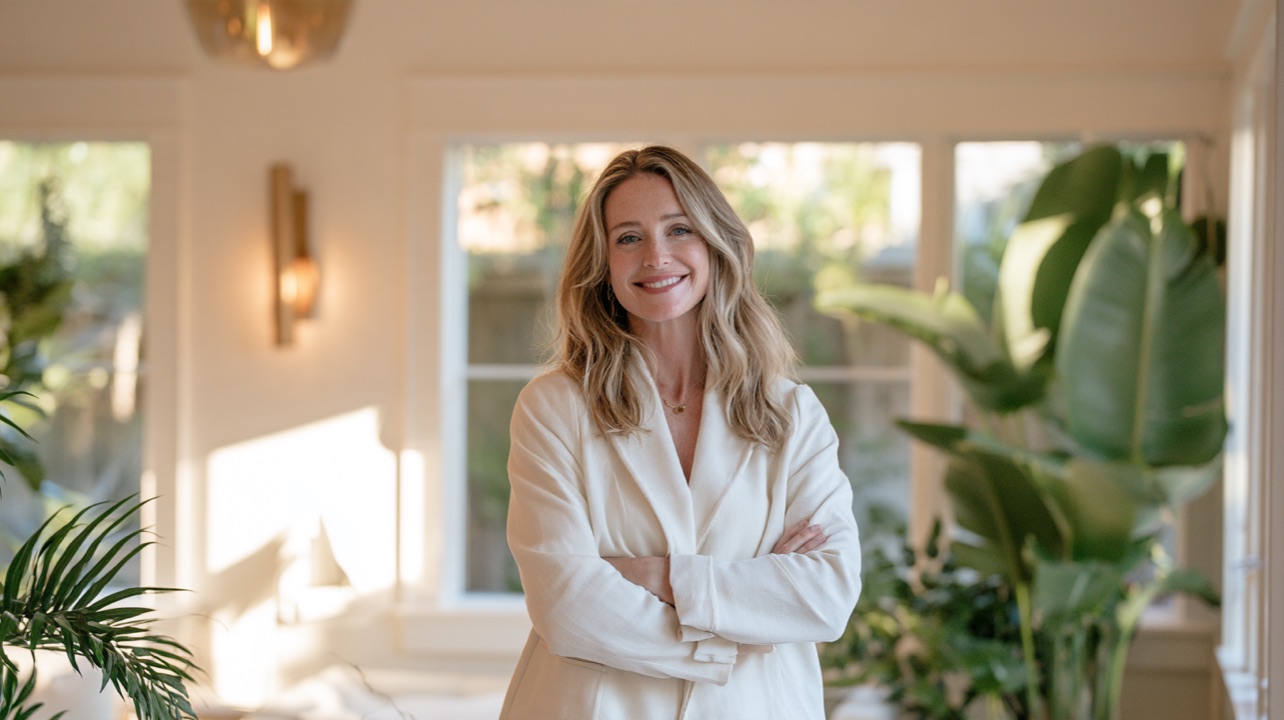
 Ashley Harwyn, PA-C
PA-C, ABAAHP · Founder, Solcara Health
Online